Obituaries

This page honours and celebrates the lives of Old Members, academics, staff, and friends of Balliol. We hope it will provide a lasting and accessible record of those connected to the College, while also offering a space for reflection and remembrance of their achievements, contributions, friendships, and the many ways in which they shaped the life of Balliol and the wider world.

The obituaries currently available on this page have been drawn from previous editions of the Annual Record, as well as from publicly available obituaries published elsewhere online. This page is still in development, and we hope over time to build a more comprehensive record.

If you would like to submit an obituary of a Balliol member, please contact the Development Office at: development.​office@​balliol.​ox.​ac.​uk.

Professor Jasper Griffin FBA

1956, BA Literae Humaniores, Dyson Junior Research Fellow 1961–1963, Tutorial Fellow in Classics 1963–2004, Emeritus Fellow from 2004
29 May 1937 — 22 November 2019

Sir Anthony Kenny (Fellow and Tutor in Philosophy 1964–1978, Master 1978–1979) 

Eulogy given at the funeral service in Balliol Chapel on 10 December 2019

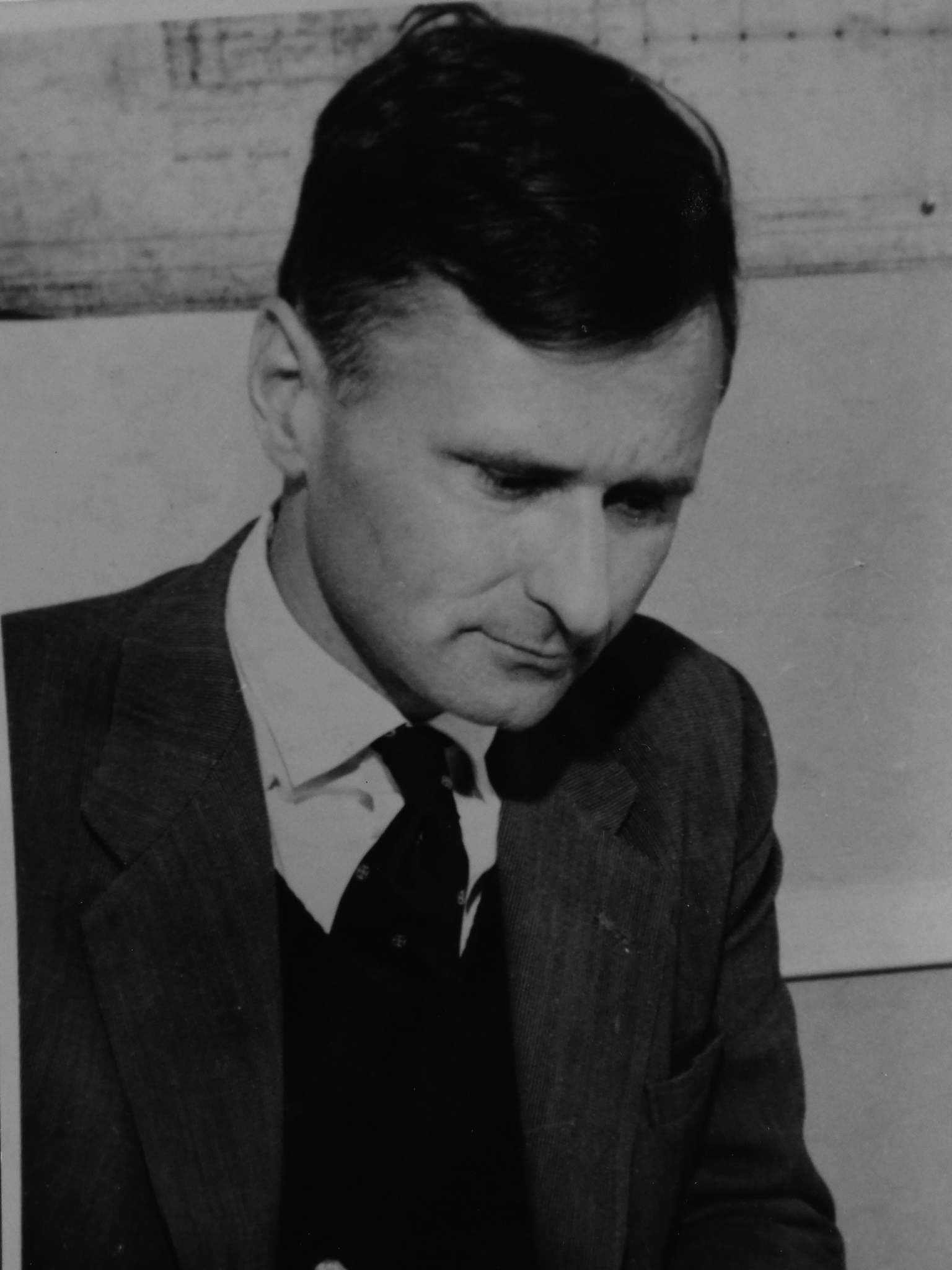
Jasper GiffinJasper Griffin was born in 1937, the elder son of a pair of civil servants who worked in the Post Office. His mother was a great lover of poetry, and she recited poems to him while he was in her womb, in the hope that he would grow up with a love of literature and perhaps become a poet himself. The procedure proved all too effective. As a seven-year old, at a birthday party, Jasper recited ‘The Lady of Shallott’, all 191 lines of it. ‘O Jasper, you are a bore,’ his mother said, when she collected him. 

At the age of 11 Jasper won a scholarship to Christ’s Hospital. The school gave him an excellent education in Greek and Latin. It also dressed its scholars in a striking period uniform. In later life Jasper told people he was grateful for that, because it gave him early practice in being stared at and regarded as odd. 

In 1956 Jasper was awarded a Domus Exhibition to Balliol, which was to be his academic home for the whole of his life, except for a one-year Visiting Fellowship at Harvard. In an Edwardian phrase, much hated by later generations, Balliol men are supposed to exhibit effortless superiority. Jasper’s undergraduate career might appear to present an example of it. Between 1956 and 1960 he obtained a first in Mods and a first in Greats and won every possible classics prize. The superiority was undeniable but it was not effortless. It was only at the third attempt that he won the Hertford Scholarship and the Ireland Scholarship. A Balliol contemporary, Ved Mehta (1956), calculated that as an undergraduate Jasper sat for 225 hours of written examinations. 

Another contemporary remembers Jasper as a popular undergraduate. In those days, he told me, the students did not divide into left-wing and right wing, but into swots and swells, and Jasper was a favourite with both groups.

He was active in undergraduate literary and debating societies. He did not engage much with societies outside the College: he spoke once or twice at the Union but only, as he put it, ‘to add a touch of polish to the floor’. In 1961 he was elected to a Junior Research Fellowship at Balliol, and after holding that for two years he was promoted to the Tutorial Fellowship in Classics which he held until his retirement 41 years later. 

As an undergraduate Jasper had attended a seminar on Euripides given by the fearsome Professor Fraenkel. An American student from St Anne’s joined the group: Miriam Dressler, a graduate of Barnard College. The two of them were quickly attracted to one another, and they were married in 1960. In 1962 Jasper’s younger brother Geoff was diagnosed with bone cancer just after taking Mods, and died at the age of 22. His death had a lasting effect on Jasper who henceforth became shy of any public demonstration of emotion. Fortunately, the gap in his life was filled shortly after by the birth of his children: Julia the next year, followed by Miranda and Tamara. 

In 1964 I became a colleague of Jasper’s. I taught philosophy to Greats pupils while he taught language and literature, and Russell Meiggs (Fellow 1939–1970, Honorary Fellow 1970–1989) taught ancient history. We both revered Russell and thought him a model of what a tutor should be. I quickly discovered that Jasper was an intellectual giant, but I learnt also that he was a gentle giant. He could be fearsome in exposing any false pretensions among his colleagues, but he never used his learning to bully his less gifted pupils. Perhaps because he was such a fastidious stylist, he published little in his early years, but his learning was often at the service of less talented writers. I found that he was capable of deep affection and strong dislikes, both concealed beneath a veil of epigrammatic courtesy. 

My wife Nancy and I treasure memories of holidays with Jasper and Miriam’s family in Italy and Sicily where the three Griffin girls and the two Kenny boys played happily together. It was a delight to listen to Jasper teasing his daughters with garbled versions of famous verses – some of which, they tell me, are now more familiar to them than the originals. For instance:

Then answered Arthur slowly from the barge 
There’d be more room if you were not so large

Or, immediately afterwards: 

I didn’t never see ’im coming, Sarge

Other memories from that period are of Jasper taking part, along with our Greats pupils and our children, in play readings of A Midsummer Night’s Dream and The Tempest. He refused, however, to join us for Titus Andronicus. ‘Last year you asked me to be Caliban,’ he said, ‘and the year before that it was Bottom. I’m tired of being type cast.’ He once joined a reading party which we gave in the chalet on Mont Blanc that belonged to F.F. ‘Sligger’ Urquhart (1890 and Fellow 1896–1934). Sadly, he had no love of the mountains. ‘If you’ve seen one Alp,’ he told me, ‘you’ve seen them all.’ 

Jasper was much beloved by his pupils, who valued his wit and generosity, and who delighted in teasing him, at school dinners, as a kind of pet elephant. Many of them went on to conspicuously successful careers. They included not only a number of prolific classicists, but also several very distinguished diplomats, and our present Prime Minister, Boris Johnson (1983), who paid a moving tribute to him in the Daily Telegraph. Jasper played a full part in College societies such as the Leonardo, the Arnold and Brackenbury, and the Vic Soc. He was always ready to share whatever undergraduate entertainments were on offer. For many years he was Steward of the Senior Common Room, a post in which he endeavoured to promote standards of gentlemanliness among its members. A gentleman must never enter the common room via the kitchen, and more importantly he should never be unkind to ladies. So when the College eventually decided to admit women as well as men, despite his initial more traditional views, he welcomed them with conspicuous gallantry. 

Jasper was uncomfortable with the Marxist tendencies of the then Master, Christopher Hill. When Hill retired he wanted him to be succeeded by the imperial historian Jack Gallagher, who had earlier held the Beit Professorship at Balliol (1963–1970). Jasper wrote to the great man asking him to stand. Jack had not been comfortable with the left-wing atmosphere of the SCR. He replied that he regarded Balliol as Siberia and he had no intention of returning there. So Jasper settled for a second best and campaigned energetically for my election as Master. 

At no time in his life did he think it was part of the job of a Fellow of Balliol to make life easy for the current Master. At a handover briefing Christopher said to me, ‘What shall we do about the Jasper problem?’ ‘There is no Jasper problem,’ I said. ‘He’s fine as he is.’ But in due course my file, like Christopher’s before me and like that of my successors after me, became full of Griffin missives expressing outrage at things we had done or failed to do. In particular he thought that successive Masters were trying to divert endowment funds from classics to parvenu subjects such as chemistry.

Jasper thought that the Senior Members of the College were too indulgent to the Marxist antics of the JCR. Having had a father who was a member of the Communist Party, he had a robust contempt for latter-day Trotskyists. I have a vivid memory of seeing him one day leaning out of an upper window to heckle, at the top of his voice, a revolutionary speech being delivered in the quad by Christopher Hitchens (1967). 

After a late start Jasper produced a number of books much admired by the classical fraternity. Unkind friends said that he was motivated by conjugal competitiveness, since he only began to publish after Miriam (Fellow and Tutor in History at Somerville, 1967–2002) had won applause for her scholarly works. Others will speak with competence about his professional publications. I will mention only his 1982 Book of Snobs. I will quote one story from the chapter on academic snobbery. Master Jenkins of Balliol slipped and fell on the snow in the Broad. Two undergraduates rushed to help him up. ‘Stop!’ he said; ‘I see two Masters of Arts approaching!’ 

In 1986 Jasper was elected to the British Academy. In 1992 he was promoted to a Professorship and in the same year became the University’s Public Orator – a role which fitted his talents perfectly. His eulogies were models of elegant Latin, and the English oration in alternate years gave him an opportunity to ruminate on the steady decline of important elements of culture and society. His pupil and successor Richard Jenkyns (1967) would do full justice to his performance in this office. 

Jasper retired in 2004. Collin Lucas (Master 1994–2001) records that after they had both retired he and Jasper lunched together in the SCR. Colin remarked that it was sad that he did not know half of the current Fellows. ‘The really tragic thing’, Jasper said, ‘is that half of them do not know who we are.’ That story brings out what one might call the Eeyore element in Jasper’s character. 

After we had all retired, Jasper and Miriam and Nancy and I took several more holidays together. It was on one of them that I came to realise that he had begun to suffer bad memory loss. When I first knew him, Jasper had the most capacious memory of anyone I have ever known: he seemed to have an almost total recall of the literature of half a dozen languages. In his last years it was tragic to see that he could not remember what he had ordered for lunch five minutes previously. I was tempted to interpret this in the most materialistic of terms. His hard disc, I felt, had been so crammed with information that it could no longer accept any new data.

But even in the years of dementia, he remained the old dear Jasper, kind and gentle and courteous. At his 80th birthday party he welcomed and charmed the old friends and pupils who greeted him, and to his dying day he won the hearts of his carers, Monika and Janka. Even flashes of the old wit recurred. When he asked me, for the fifth time, what was the name of the new Master of Balliol, I told him it was Helen Ghosh. ‘What a strange name,’ he said. ‘In all my years as a Homer scholar I never thought of Helen as gauche.’ While Jasper’s memory faded Miriam was diagnosed with terminal cancer. She had a long remission that defied medical expectations. After her death in 2018 Jasper declined both emotionally and physically, even though he was lovingly cared for by his daughters. 

I last saw Jasper two days before his death. Nancy and I had been entertaining one of his star pupils, the Irish diplomat Philip McDonagh (1970). I walked Philip up to the John Radcliffe Hospital to see Jasper on his deathbed. ‘Oh Jasper,’ Philip said, ‘“Thou art cabin’d cribbed, confined.”’ In a muffled voice Jasper capped the quotation. It was just what he would have done any time in the previous 70 years.

Epitaph for Jasper Griffin 

Geoffrey Plowden (1947)   

Discipuli comitesque tui te flemus ademptum, 
Iasper, ut implevit pectora nostra dolor. 
carmina Maeonidae qui Vergiliique docebas, 
nunc cum Maeonide Vergilioque iaces.

We, your pupils and friends, weep for your loss, Jasper, since grief has filled our hearts. You, who used to teach the poetry of Homer and Virgil, are now at rest with Homer and Virgil.’

Jasper and Christ’s Hospital 

Geoffrey Cannon (1958) 

‘We owe to others who we are,’ said Goethe. The original benefactor of Jasper’s education was Nicholas Ridley, who in 1552 encouraged the boy-King Edward VI to create Christ’s Hospital (CH) in the City of London on the site of a monastery looted by Henry VIII, as a refuge and school for foundlings. Edward died the next year. In 1555 in the reign of Queen Mary, Ridley was burned at the stake in Oxford, as commemorated by the Martyr’s Memorial by the side of Balliol. 

Moved in 1902 near Horsham in Sussex, ‘the religious, royal and ancient foundation’ of CH continued to be supported by more benefactors, the London City Guilds, as a public school for children of impoverished parents. It retained its ‘Blue Coats’ with clerical-style bands, breeches and orange stockings, adapted from 16th-century dress. 

Jasper, whose parents were Cockneys who left school at the ages of 14 and 15, was in Peele A house, named after an Elizabethan playwright who might have co-written Titus Andronicus and who died of the pox age 40. Jasper told his friend Ved Mehta (1956) that public boarding school life was ‘like being put on a ship and sent off to sea . . . It was the most intense experience one had’.1

Jasper’s immediate benefactors at CH were the headmaster H.L.O. Flecker and the senior classics master Derrick Macnutt (compiler of the fiendish Ximenes crossword for The Observer), co-authors of the Concise Latin Grammar used as a standard textbook at CH. Jasper’s was the last year when 11-year-olds were started not in Latin but Greek. Senior boys marked out as scholarship candidates to Oxford or Cambridge became ‘Grecians’ and from the age of 17 wore special coats with 14 big buttons and velvet cuffs. It is likely that Derrick Macnutt, who was deeply learned and ferociously demanding, maintained contact with Russell Meiggs (Fellow 1939–1970 and Honorary Fellow 1970–1989), also an Old Blue (a CH alumnus). But Jasper did not need any special support to achieve his Domus Exhibition in 1956. 

I knew Jasper at CH because I also was in Peele A, arriving at the same time as his brother Geoffrey, who like Jasper became a Classics scholar, and later my best friend at Oxford. Boys in different houses and of different years did not mix, and my own experience of Jasper was limited to his inquisitions in Dining Hall. He was already grand and orotund; when he spoke everybody else was silent. He once identified me as ‘oleaginous’, to which I had no reply, not knowing what the word meant, and he also called me a ‘pseudo-intellectual’, which was prescient, for in 1972 I was named Private Eye ‘Pseud of the Year’. But he was also kind. When I arrived to take the Balliol scholarship at the end of 1957, he welcomed me with sherry in his College rooms. 

Geoffrey died of cancer aged 22. Much later, I sent Jasper from my father’s library a leather-bound 17th-century version of Caesar’s Commentaries in Latin. In his note of thanks, he told me of a recent dream in which Geoffrey had appeared, and in the dream he had exclaimed ‘Oh, you are not dead!’ and Geoffrey smiled and shook his head, and disappeared. While Jasper has now died, he lives on in those he taught and touched. So many! 

1 There is a celebration of Jasper at CH and Balliol by Ved Mehta in his Up at Oxford (John Murray, 1993)

For Jasper 

John Davie (1972) 

Shed tears, Muses of Greece, and your kindred of Italy, plangite, Pierides consanguineaeque Camenae, 
nam iacet, heu! Jasper; nenia vestra sonet. 
patria erat Balliol, Miriam sed semper amabat 
necnon tres filias, plus oculis a! suis. 
magnus erat Jasper, magnumque capaxque cerebrum, 
pectora sed inerant mollia et apta comi. 
adice Maeoniden Anchisiadaeque poetam; 
exposuit melius scripta ea nullus homo.
vitam tot hominum excoluisti,
care sodalis; te excipient vates, sole lucente suo. 

for Jasper, alas! is dead. Let your funeral song ring out! 
Balliol was his spiritual home, but Miriam the woman he always loved, 
as he did his three daughters, more than his own eyes. 
Jasper was a large man, with a brain large and spacious, 
but within beat a heart that was gentle and suited to a kind person. 
Consider, too, Homer and the poet who sang of Aeneas: 
no one on earth expounded better what they wrote. 
You enriched the lives of so many people, my dear old friend; 
The poets will welcome you, as the sun that is theirs sheds its light


Audrey Crowe (née Screen)

1981, PGCe Educational Studies
09 December 1959 — 16 October 2019

Lionel Crowe 

Audrey Crowe, who died on 16 October 2019, was a PGCE student at Balliol for the year 1981/1982. She later went on to teach at Wallingford School 1982–1983 and at Larkmead School 1983–2019, where she taught geography (and a range of other subjects) and became a Director of Learning, responsible for the academic development and wellbeing of students. She kept up her connection with Oxford University through working with Department of Education in Norham Gardens, overseeing geography PGCE students placed at Larkmead School. Audrey was the first in her family to go to university and she used this fact to motivate disadvantaged students to believe that university was something that they could aspire to. 

Audrey was hugely proud to have attended Oxford and Balliol College in particular. Whilst at Balliol she was introduced to rowing and quickly moved from the novices boat to the Ladies First VIII, a boat that included Cressida Dick (1979). That year, 1982, the Ladies First VIII was the College’s most successful crew and Audrey took great pleasure, along with her colleagues, in being served champagne by the Master. She kept a photograph of the First VIII in her office for the last 37 years.

Paul Olsen

1941, BA Modern History
14 May 1923 — 08 October 2019

The Olsen family and Mike Moran

Paul OlsenPaul Olsen was an outstanding educator who made an immense contribution as a headteacher in the Archdiocese of Birmingham. A clear educational vision and strong sense of mission were underpinned by his personal faith and commitment to Catholic social teaching. 

One person he inspired was Lord Patten of Barnes (1962); a history pupil of Paul’s at St Benedict’s, Ealing. In his memoirs, Lord Patten credits his decision to study history at Balliol to Paul’s guidance. The great inspiration of Paul’s leadership lay in his ability to unlock the potential of young people, no matter their background, who would be the first in their family to access higher education. 

Paul was born in Walworth, London, in 1923; his twin sisters two years later. A close, loving family, the Olsens lived in a tenement building. His Danish father worked as head chef on cruise liners, so could be absent for months. Paul won a scholarship to the Queen Elizabeth Grammar School, Barnet, where he excelled in academic studies and all sports. He was only able to take up his place at Balliol with help from charitable grants. 

War interrupted Paul’s time at Oxford. As an officer in the Royal Navy, he survived combat in the Mediterranean, followed by Motor Torpedo Boat duties in Lagos and then taking his own command in the North Sea and Orkneys. He was on D-Day escort duties in 1944. Returning to Balliol, he studied history under Dick Southern (1929, Fellow and Tutor in Modern History 1937–1961 and Honorary Fellow). 

Paul had always wanted to teach because a good education was the key to a better life. He ‘cut his teeth’ in both state and independent schools around London. He became the first Catholic Lay-headteacher in the UK, founding the brand new St Thomas Aquinas Grammar School, Kings Norton in 1963. The school rapidly established itself as high achieving, opening up employment and educational opportunities to many students from working-class backgrounds. In 1974, Paul took the reins at the fledgling St Augustine’s Comprehensive School, Redditch. Both schools continue as beacons of his educational values. During this time he and his wife, Mary, were also bringing up their seven children. 

Paul ‘semi-retired’ to Burnham-on-Sea in 1982, where he and Mary took over Southleigh Kindergarten. They continued to support their growing family as well as taking a full part in the Christian communities around the town. Paul died on 8 October 2019.

Danny Truell

1982, BA PPE
05 November 1963 — 30 September 2019

Nick Moakes (1982) 

Danny Truell died in September 2019 after long, brave battle with a degenerative disease. 

Danny came up to Balliol to read Literae Humaniores but quickly changed to PPE. Politics always loomed large in his life. As a teenager, he flirted with the Communist Party, but at College he contented himself with vociferous, active involvement in Left Caucus. He remained a member of the Labour Party throughout his life. 

Danny joined the National Coal Board (NCB) after leaving Oxford. He was proud of having spent time down a mine in South Wales. However, the NCB wisely decided that his talents would be put to better use elsewhere and moved him to the pension fund, where he was a natural. He was fascinated by financial markets until he died. 

Danny moved to Hong Kong in 1992 to join SG Warburg and wrote some startlingly original investment research. His ability to see unconventional angles was always a hallmark of his thought process. He returned to London in 1996 to re-join the Coal Board’s pension fund, which was promptly bought by Goldman Sachs. 

Danny retired in 2005 to settle in Devon and concentrate on Pension Insurance Corporation, a business he started with his brother, which has since grown into a multi-billion-pound company. 

His semi-retirement did not last long, and he joined Wellcome Trust as CIO in 2005. Danny was always keen on disrupting the status quo. However uncomfortable, the major changes he introduced at Wellcome enabled it to navigate the 2007–2008 Global Financial Crisis and subsequently grow into a top-tier global endowment. At tense times during the crisis, as the financial system looked as though it might implode, Danny was at his best: calm, focused, confident and decisive. 

He was passionate about giving young people early responsibility and was instrumental in Wellcome initiating a graduate recruitment scheme. He chaired the charity Debate Mate, which aims to improve social mobility by building communication skills. 

Danny was reticent about his personal life, especially towards the end, when his illness became more acute. However, he spoke about his father, George and mother Mary, with pride, love and affection. He married Naomi Price in 1998, although they had been together for a long time before that. Sadly, the marriage ended a decade later, which was a torrid time for them both after an intense twenty-year relationship. 

Danny was often irascible and sometimes infuriating. But he was loyal, generous to a fault, always stimulating and often charming. It was a privilege to count him as a dear friend and a brilliant colleague.

Sir Ronald McIntosh

1938, BA PPE
26 September 1919 — 01 April 2019

Andrew Graham (Master 2001–2011) 

Ronnie McIntosh and I first coincided in 1965 in the newly created Department of Economic Affairs (DEA). He was already a Deputy Secretary whereas I was fresh from university. Only later, when I had learnt my economics working for Tommy Balogh (Fellow 1945–1973) and then, aided by Balogh’s support, moved to Balliol, did I discover the multiple overlaps in our lives. We had been to the same school, Charterhouse; there was the connection with Balliol (where he had been an undergraduate, both before and after the war); he had learnt his economics at the feet of Tommy; and he owed his position at the DEA to Balogh. 

However, I only really become fully conscious of him in July 1973 when he reached the peak of his career as Director General of the National Economic Development Office (NEDO, known as Neddy). Back then, economic planning was a smart French idea which we should copy, Keynesianism f lourished, growth averaged 2–3 per cent per annum and an Oxford house could be bought for less than three times the salary of an academic. But, within months, war in the Middle East, the quadrupling of oil prices and Edward Heath’s battle with the coal miners brought the so-called Golden Age to an abrupt end. 

In his autobiography, Turbulent Times, Ronnie gives a vivid account of that autumn of 1973 when he did everything possible to use Neddy as a place to build consensus, but Heath and the other ‘hard’ men in the Tory Party refused any compromise with the miners. The current bifurcation in British politics, especially the split over Europe, might even be traced back to this critical period. Heath’s failure undoubtedly opened the door for Thatcher, and her policies were at least as much ‘anti-Heath’ as ‘pro-conservative’. 

All of this was anathema to Ronnie. He was an extremely talented, charming, middle ground, dedicated public servant, with the guts to speak his mind. Having been in the war and been close friends with both Heath (1935) and Roy Jenkins (1938), a direct contemporary at Balliol, he was passionately pro European. And, it must be added, hugely appreciative of, and supportive of, Balliol, writing in one of his last messages to the College that he wished most ‘to help people from families that have never had anyone at a university, to get to Balliol and stay the course there’. 

I miss him – for his sanity, his warmth, his ability, and his values.

Paul Streeten

1944, BA PPE, Tutorial Fellow in Economics 1948–1966, Professorial Fellow 1968–1978, Honorary Fellow 1986–2019
18 July 1917 — 06 January 2019

Professor Frances Stewart (Professor Emeritus of Development Economics, Somerville College) 
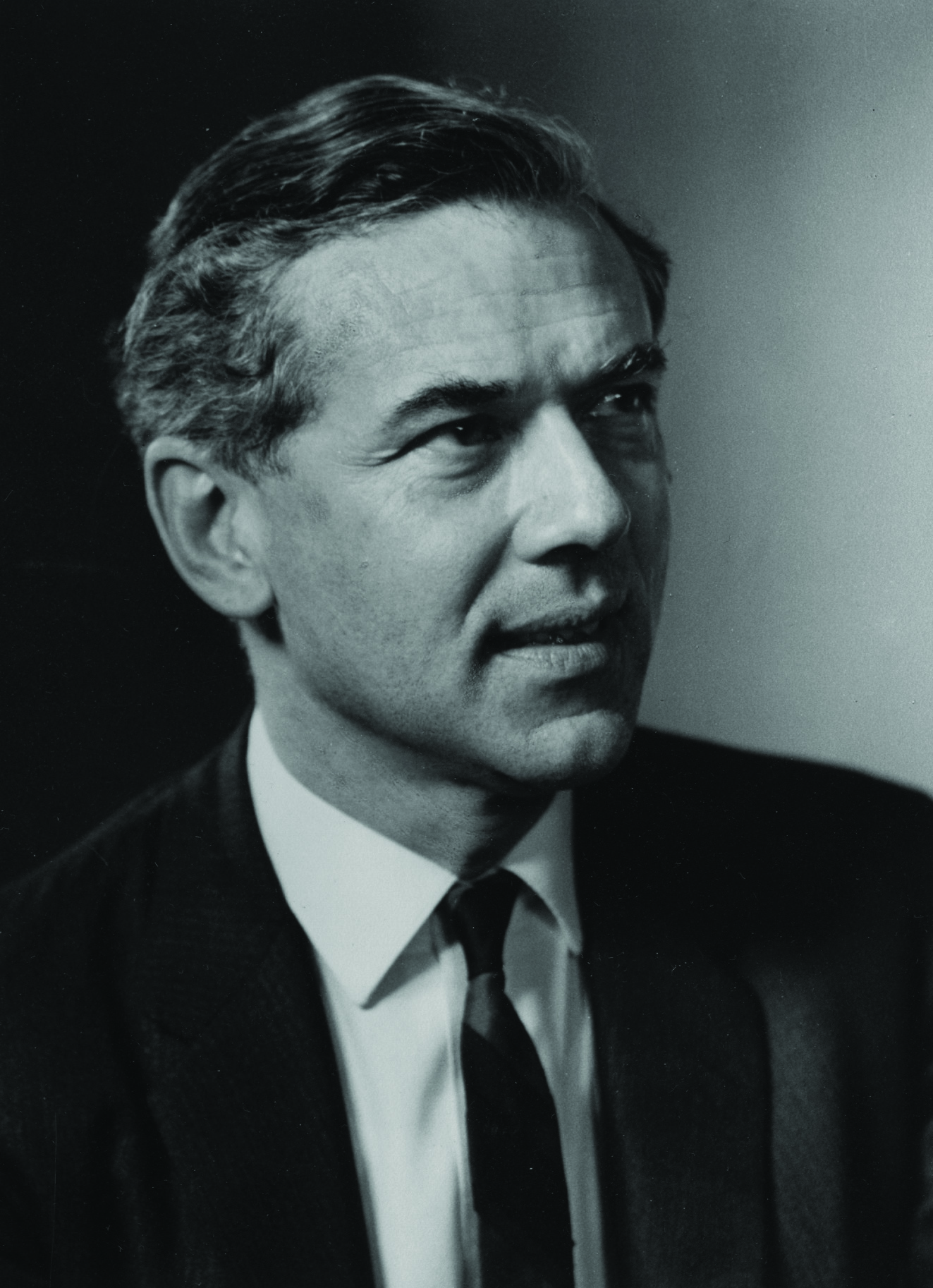
Paul StreetenIn 2008, William Barber (1949) dedicated his book about Gunnar Myrdal ‘To Paul Streeten: Inspiring teacher, distinguished scholar and valued friend’. These words beautifully summarise the life of Paul Streeten, who died in January 2019, aged 101. 

His qualities were apparent from an early stage. In 1944, the Principal and Vice-Chancellor of Aberdeen University (Sir William Fyfe), recommending him to Balliol, wrote that he was ‘a human of the prime class’, both ‘clever and charming’ (letters from Fyfe to Master of Balliol, 16 April 1944 and 7 October 1944); while his Balliol tutor, Thomas Balogh, in a letter to the Rockefeller Foundation in 1947, said: ‘he has a brilliant mind, remarkable not only for originality, but also for a firm grasp of the facts’ (2 January 1947). 

Paul was born in Austria, son of Wilhelm and Berta Hornig. His father died when he was only two, and he was brought up by his mother and her family. As a teenager in Vienna in the 1930s, Paul devoted himself to the socialist youth movement, marching, demonstrating, and, after 1933, participating in underground activities, including carrying messages and distributing illegal news-sheets. But in the mid-1930s his interests switched from the youth movement to intellectual pursuits, including psychology and sociology, influenced, among others, by Max Adler, who was a family friend (as were Wittgenstein and Freud). Paul’s political perspective also changed: from a belief in revolutionary socialism towards social democratic views; and, as he states in a personal memoir, from a preoccupation with public life and politics towards more private, individual concerns (Streeten 1986). He retained the later perspectives throughout the rest of his life: an intellectual, a man of progressive values, not a political activist. 

The Hornig family were secular Jews; they managed to flee after the Anschluss, his mother and brother to the US, his aunt’s family to Palestine, and Paul himself to the UK, where he lived, for a short time with two sisters, called Streeten. Soon after arriving in England, he was admitted to read Economics at Aberdeen University (they did not have a department for sociology, his preferred subject), but after a year there he was interned as an ‘enemy alien’, in unpleasant conditions – first in the Isle of Man and then Canada. Eventually, he was released, returned to the UK and joined a Commando Unit to be dropped into Sicily in advance of the main invasion. When he joined the unit he was told to change his name from Hornig in case he was captured, and he chose the name ‘Streeten’. The sisters were apparently delighted. He was very badly wounded in Italy, and spent a year in hospital. 

He was then admitted to Balliol to read PPE. When he arrived in November 1944 his arm was still strapped up. In Balliol, his economics tutors were Maurice Allen (Fellow and Tutor in Economics 1931–1948) and Thomas Balogh (Fellow and Tutor in Economics 1945–1973), the latter in particular becoming a lifelong friend and collaborator. Paul found the combination of the two an excellent one: while Maurice Allen taught the basics of economics with clarity and logic, Tommy Balogh ‘was so confusing that I had to go back to my room and work it out for myself’ (Streeten 1986). After getting a first in PPE, Paul was made a lecturer in Balliol, substituting for Maurice Allen, who had joined the Bank of England, and when Maurice left permanently, Paul became official Fellow and Tutor in Economics. 

Paul was a brilliant tutor – I myself was taught economics by him as an undergraduate, from 1959 to 1961, and later he supervised my doctorate. He listened carefully and with respect, gave incisive comments, and made every topic interesting. He treated one as an equal, as a respected colleague rather than an ignorant student. Other accounts1 of his teaching agree:

Paul combined an incisive intellect and an original mind with a striking lucidity 
in speaking and writing, which made him a superb teacher – Professor Deepak 
Nayyar (1967 and Honorary Fellow)

. . . a guru in the full sense of the term that folds teacher, guide and inspirer into 
one – Professor Akbar Noman (1966)

You [Paul] had the remarkable, indeed unique gift of listening and discussing 
with a young student as if with an equal, as if (could it have been true?) what the 
student was saying really interested you. – Steven Lukes (1958)

Three economists had a particularly important influence over Paul’s thinking and writing. Maurice Allen’s rigour and sharp logic can be seen in the very careful analytic papers Paul wrote in the late 1940s and 1950s – for example, his paper on ‘The Theory of Profit’ (Streeten 1949), ‘The Effect of Taxation on Risk-taking’ (Streeten 1953), ‘Reserve Capacity and the Kinked Demand Curve’ (Streeten 1950-51), among many. Papers he wrote at this time present carefully argued critiques of conventional views, particularly questioning their underlying assumptions about human behaviour and economic relationships and coming to controversial conclusions. For example, he suggested that higher profits taxation might not reduce risk-taking but could increase it, with different assumptions about behaviour and technology. These papers, taken together, provide a devastating critique of prevalent micro-economic assumptions and conclusions, showing that they are based on a simplistic view of economic relationships. What these, and later, papers underline is that the world is too complex to be described and analysed in simple economic models, yet, as Paul later acknowledged, ‘it takes a model to kick out a model’ (quoted in Stretton 1986: 8). This partially explains the persistence of the models in mainstream economics. 

A second major influence on Paul’s thought and life was Thomas Balogh, an iconoclast with an instinctive distrust of conventional thinking and, quite often, brilliant insights, yet lacking careful analytic analysis to back these insights. A succession of papers written jointly with Balogh marry Balogh’s iconoclasm with Paul’s sharp, critical and systematic analysis to produce some important and influential contributions. Perhaps the best of these is ‘The Coefficient of Ignorance’ (Balogh and Streeten 1963), which provides a devastating critique of the widely accepted and extremely influential growth model of Solow, arguing that it leaves a huge ‘black box’ of unexplained growth, which Solow attributes to (unexplained) ‘technical progress’, and Balogh and Streeten rightly term ‘the coefficient of ignorance’. 

The third economist to have a considerable influence over Paul’s approach to economics was the Swedish Nobel Prize winner Gunnar Myrdal. In addition to being an academic economist, Myrdal was a political activist in Sweden in the 1930s, partly responsible for the introduction of a welfare state. His major early contribution was to question the role of values in economics – economists then and now2 generally assume that their analytic and positive work is value free, and that values enter only in normative statements – which theorists try to avoid. Myrdal’s first important publication on this was The Political Element in the Development of Economic Theory, published in Swedish in 1930 and translated into German in 1932. Paul met Myrdal in the late 1940s and agreed to translate the book from German to English. The English version came out in 1953 with an appendix on ‘Recent Controversies’ by Paul illustrating how economists continued to ignore the political element. 

The need to untangle the manifold ways that values penetrated economic theory was an important component of Paul’s work. He attacked the view that ethical judgements had no place in scientific analysis, arguing that values informed assumptions and concepts in complex and pervasive ways. Perhaps the best illustration of this was in his penetrating paper on ‘Economics and Value Judgements’ (Streeten 1950). This paper went beyond the ‘political element’, showing how the penetration of values into economics was so central that it was not possible to deal with the issue, as Myrdal had recommended, simply by being explicit about the values of the analyst. Many concepts ‘both describe facts and contain valuations’ (Streeten 1950: 584). This view was later adopted by Myrdal in Value in Social Theory (Myrdal 1958, Myrdal 1968), a collection of papers, put together and translated by Paul, which contains a critique of welfare economics by Paul – ‘Programmes and Prognoses’ – which, among other things, attacks the separation of means and ends that is assumed in much social welfare theory. 

In the early 1960s the direction of Paul’s work changed from preoccupation with economic theory to the broader arena of development economics and it is in this field that his formidable global reputation lies. Several events led to this switch. First, Myrdal invited him to work on his mammoth book Asian Drama (Myrdal 1968), to which Paul contributed an important appendix, entitled ‘Economic Models and Their Usefulness for Planning in South Asia’, which contains a thorough critique of the assumption of a constant capital output ratio that, at the time, formed a fundamental component of planning for economic growth. In 1963 he was invited to work on problems of Indian planning at the Indian Statistical Institute in Delhi. In 1964, he became Deputy Director General of the just established Ministry of Overseas Development. From 1966, Paul was Deputy Director (and Acting Director) of the newly founded Institute of Development Studies at Sussex University, and in 1968 he became Warden of Queen Elizabeth House and Director of the Institute of Commonwealth Studies at Oxford. He joined the World Bank in 1978 to work with the Pakistani economist Mahbub ul Haq, and subsequently moved to Boston University as Director of the Economics Department’s Center for Asian Development Studies, which later became the World Development Institute. This, his final appointment, was a fitting post for Paul, who was a citizen of the world, not only in terms of his personal geographical trajectory – which encompassed many countries from every region of the world – but also his far-reaching interests and contributions. 

Paul worked on development economics issues for half a century, producing a huge stream of papers and books. Although the topics changed, his approach remained informed by his early work, including a continued preoccupation with values, a questioning of conventional concepts and models, particularly the unthinking transfer of Western concepts to the different situation of developing countries, and a critique of a strict means/ ends distinction. The hallmark of a Streeten paper is a precise deconstruction of concepts and theory, and suggestions for a range of alternative approaches. Every paper was written with style, wit and subtlety. The papers were the writings of a PPE product, combining all three disciplines. He is often described as an ‘institutionalist’ (for example by Stretton, 1986), meaning that to understand development one must understand the institutions in place in the particular context, encompassing both formal and informal structures, human motivation and behaviour, institutions which are frequently ignored in mainstream analysis. But no one categorisation does him justice, and were he around he would undoubtedly find several compelling reasons why this appellation is incorrect. 

Perhaps his best-known contribution in development was his work on Basic Needs: that is the idea that a predominant objective of development should be to see that every person’s basic needs are met – for food, shelter, education, and non-material needs such as employment and dignity; and that this objective should be given priority over the maximisation of economic growth. Together with Mahbub ul Haq he convinced the head of the World Bank to make Basic Needs a priority, in the late 1970s, and he led a team in the World Bank to analyse the implications. The work was brought together in (Streeten, Burki et al. 1981). For a short while, until the debt crisis and the dominance of neo-liberal economics swamped poverty-focused strategies, the Basic Needs approach was propagated by the World Bank in its dealings with developing countries. Despite the economic crisis of the 1980s, these ideas did not go away, but reappeared in a different and more sophisticated format, in the Human Development approach, elaborated in the 1990 Human Development Report to which Paul contributed. 

Other important contributions included:

• a critique of the idea of balanced growth in which he provided convincing reasons why unbalanced growth might be more productive than balanced growth as bottlenecks may create incentives and opportunities; 

• a critique of the use of Western concepts of employment and unemployment applied in a developing country context, and similarly of the capital-output ratio, as noted above; 

• analysis of the role of foreign investment in development, giving it neither wholesale condemnation, as many did, nor wholesale praise as others did, but carefully differentiating good and bad characteristics in varying circumstances; 

• analysis of how economists can contribute to (and qualify) Economic and Social Rights; 

• continued contributions to successive Human Development Reports, including putting the concept of ‘jobless growth’ on the map; in this area his repeated insistence that a strict means/end distinction is invalid was particularly pertinent.

work consisted in analysing, classifying and deconstructing accepted views. As he himself said, ‘I have always been better as a critic than as an apologist or propagator or advocate’ (Streeten 1986: 154). Yet even though it takes models to push out models, the cumulative effect of the work of Paul and others (including Myrdal, Seers, Hirschman and many of Paul’s students) has been to lead to a general acceptance of the need for multidisciplinarity in development analysis, to take context into account, to widen development objectives beyond economic growth and to be cautious before making unthinking use of conventional concepts and theories. 

Apart from intellectual contributions, Paul also made substantial institutional ones, as a good ‘institutionalist’ should. He turned Queen Elizabeth House into a thriving multidisciplinary centre of teaching and research, reflecting his own wide-ranging perspectives. During his wardenship, Queen Elizabeth House became a haven for visitors from overseas – in particular welcoming Visiting Fellows from the subcontinent and a succession of intellectual refugees, especially from Bangladesh, when their home environment became hostile. In 1972, he started World Development, and was the chief editor for many decades, turning it into the pre-eminent multidisciplinary development journal. The journal reflected Paul’s approach, both in its multidisciplinarity and in its catholic and tolerant reach, welcoming papers from the orthodox as well as the heterodox. 

For those who knew Paul, he will be remembered not just as a scholar but also as a witty, stimulating and gentle friend, with dancing eyes, always ready for a gossip, ‘a verray parfit gentil knight’, as Hugh Stretton wrote in concluding a biographical essay. 

Paul had a very long (67 years) happy marriage to Anne. He leaves two daughters (Tish and Judy), a stepson (Jay), two granddaughters (Emma and Tulsi) and two great-grandchildren (Leo and Siena). 

Paul was devoted to Balliol. Replying to the letter telling him he had been awarded an Honorary Fellowship, he wrote: ‘Balliol is my second family and to be honoured by Balliol is the most wonderful thing that can happen’ (letter to the Master, 5 March 1986).

1 Tributes to Paul on his 100th birthday.
2 Myrdal commented when a new edition of his book was being produced in 1982: ‘This book is unfortunately as much to the point today as when it was first published.’ (Swedburg 1990) 

References
Balogh, T. and P.P. Streeten (1963). ‘The Coefficient of Ignorance.’ Bulletin of the Oxford University Institute of Economics & Statistics 25(2): 99–107.
Myrdal, G. (1958). Value in Social Theory: A Selection of Essays on Methodology. London, Routledge and Kegan Paul.
Myrdal, G. (1968). Asian Drama: An Inquiry into the Poverty of Nations. London, Allen Lane, The Penguin Press.
Streeten, P. (1949). ‘The Theory of Profit.’ Manchester School XVII(3): 266–296.
Streeten, P. (1950). ‘Economics and Value Judgements.’ Quarterly Journal of Economics 64(4): 583–595.
Streeten, P. (1950–51). ‘Reserve Capacity and the Kinked Demand Curve’. Review of Economic Studies 18(2): 103–113.
Streeten, P. (1953). ‘The Effect of Taxation on Risk-taking.’ Oxford Economic Papers 7(3): 271–287.
Streeten, P. (1986). ‘Aerial Roots.’ Banca Nazionale del Lavoro Quarterly Review 157: 135–159.
Streeten, P.P., S.J. Burki, M. ul Haq, N. Hicks and F. Stewart (1981). First Things First: Meeting Basic Human 
Needs in Developing Countries. New York, OUP.
Stretton, H. (1986). Paul Streeten: An Appreciation. Theory and Reality in Development. S. Lall and F. Stewart. London, Macmillan: 1–27.
Swedburg, R. (1990). Introduction to The Political Element in the Development of Economic Theory. R. Swedberg. London, Transaction Publishers: vii–xxxvii.


I am grateful for some comments on a previous draft from Deepak Nayyar (1967) and Akbar Noman (1966), both former students of Paul.

William Field

1981, BA PPE
20 August 1962 — 01 January 2019

Lucy Elgood (1981) 

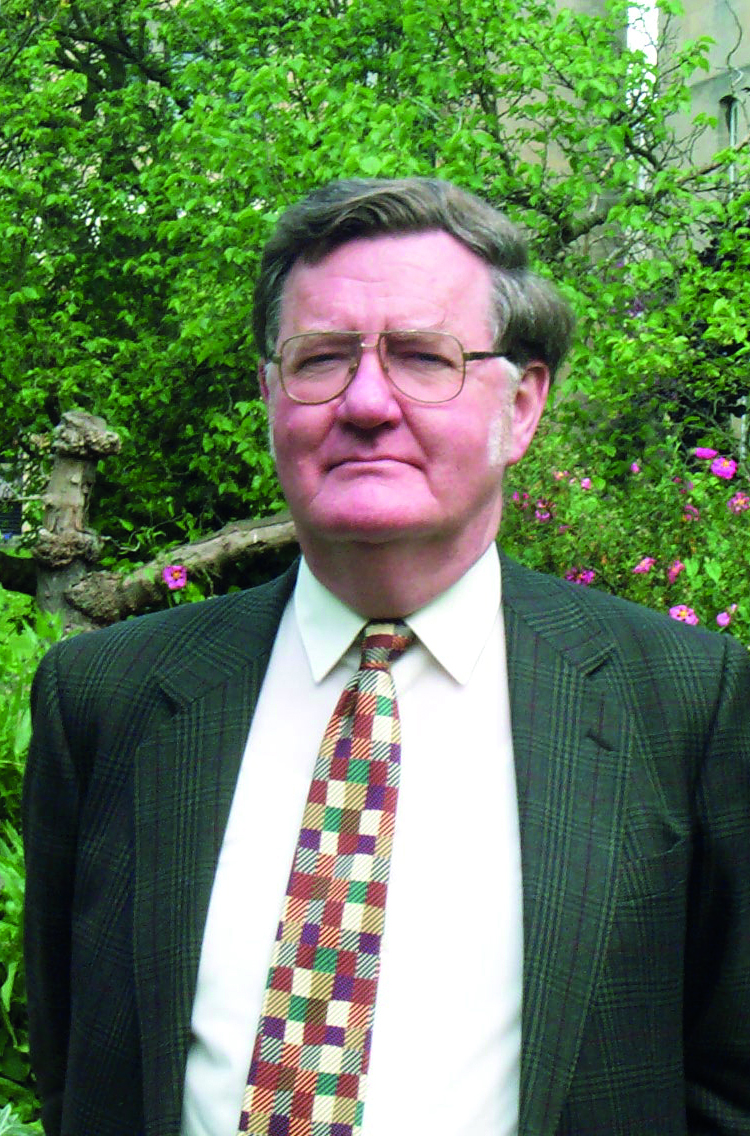
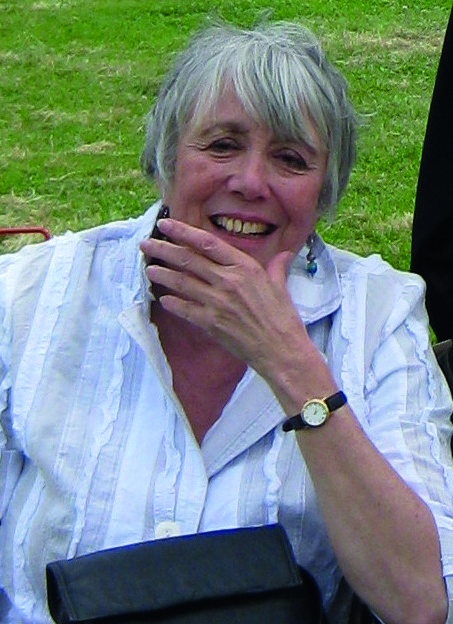
William FeildWilliam Field – known to many at Balliol as Bill – died in December 2018 at the ridiculously early age of 56, following a heart attack. 
Born in 1962, William grew up in west London, went to Ealing Green High School, and arrived at Balliol in 1981 to study PPE. He was a stalwart of Balliol Left Caucus, an enthusiastic member of the Cuppers-winning Second XI in football, and directed and appeared in many theatrical productions across Oxford – reaching the pinnacle of his acting career when he took on the role of Prince Charming in the Balliol panto of 1983. 

After Oxford, William worked as a researcher for Austin Mitchell MP, studied television production at the Royal College of Art and freelanced with Bain & Co. In 1989, he joined the management consulting division of Coopers & Lybrand. In 1993, William was part of a team that set up Spectrum Strategy Consultants, providing specialist advice to the media sector. Over the next 15 years, he became managing director for Europe, and built Spectrum’s sports practice. Among other projects, he helped the Premier League develop the process by which it has valued and sold its rights so successfully since the early 2000s, and he worked with UEFA to develop its digital proposition. He was also instrumental in creating the collegiate culture that distinguished Spectrum from other consultancies.

William set up Prospero Strategy Consultants in 2007, providing advice to sports and media companies. His work covered racing, football, rugby, cricket and many other sports. He advised on broadcast and digital media strategies, technology and rights across the US, Europe and Asia. He was a frequent media commentator. 

He combined deep understanding of all the elements of sports management – sponsorship, organisation, governance, public policy, technology and rights – with strong and rigorous consulting capabilities. As a result, he was highly respected by his clients and colleagues. William was also brilliantly funny and obsessively argumentative. He was a loyal, passionate, and often frustrated, supporter of both Chelsea FC and the Labour Party. 

He applied his systematic approach to his many interests: gardening, wine, cooking, music (his tastes were wide-ranging – from early music and Purcell to recent discoveries like Beak and Julia Holter) and his online Hattrick football team. At the time of his death, he was Hattrick’s reigning English champion. William and I got together at Balliol and married in 1993. We have three children: Matilda, Jake and Stella.

Julia Delafield Hore

College Secretary 1980–2007 and Fellow Commoner
01 December 2018

The Revd Douglas Dupree (Emeritus Fellow) 

Julia Delafield HoreFrom an address given at the Memorial Service in Balliol College Chapel on 15 January 2019 
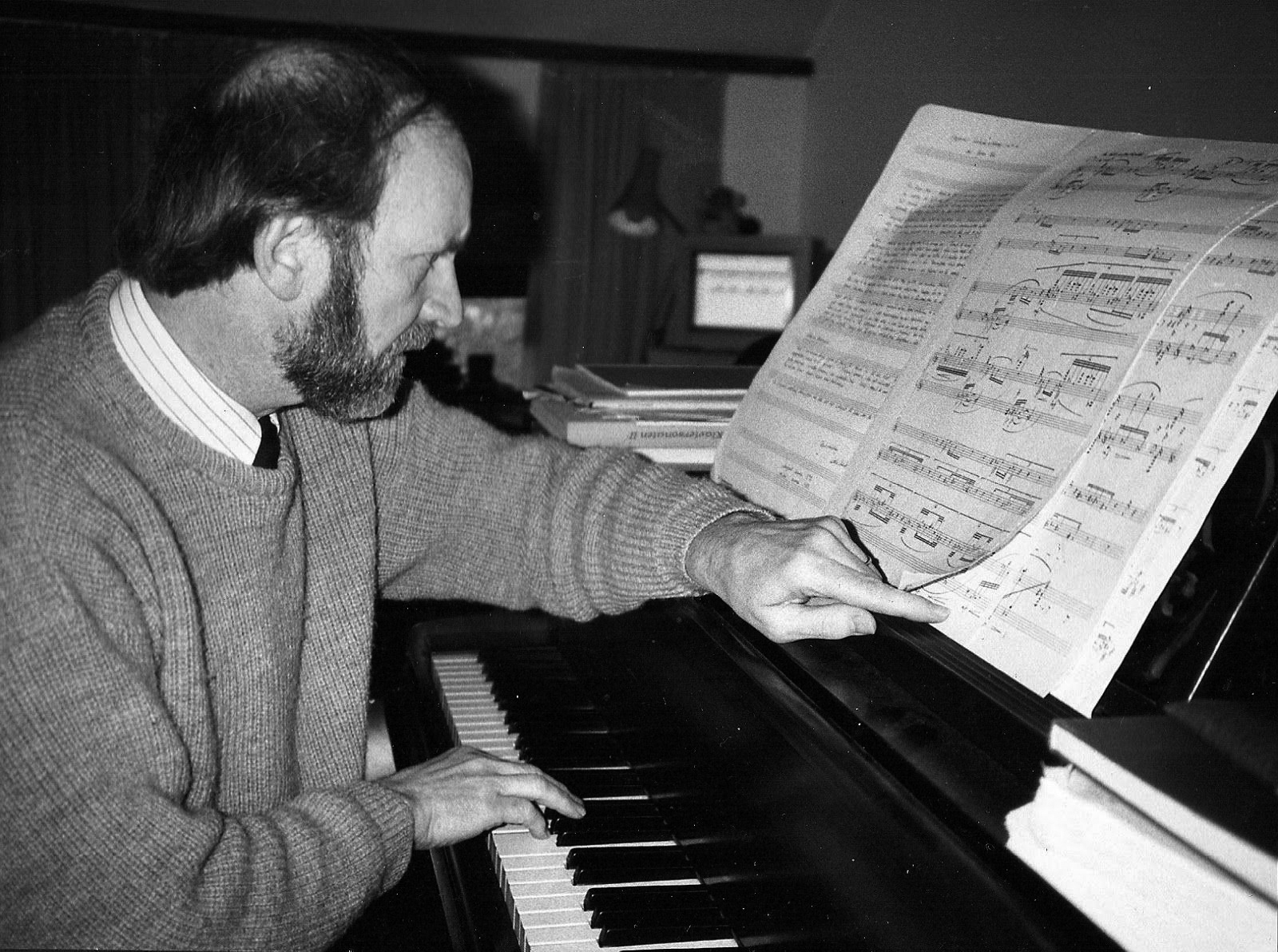
Julia led a rich and full life that began surrounded and held in childhood and youth by a loving family. Her family provided the foundation that launched her into the world – the television and arts world in London that challenged and developed her mind and imagination and that gave her an early introduction to all manner of different people. And then there was her long life in Oxford and Balliol College. 

Julia enjoyed sharing stories of her childhood in Surrey and of her family. I believe that that solid loving family contributed a great deal to Julia’s strength of personality and capacity for friendship all through her life. I can see – in the mind’s eye – that close family unit – en famille and at play: Geoffrey and Mary Hore and their two girls, Julia Photograph by courtesy of Matthew Conisbee. and Joanna, out of doors in the countryside walking and picnicking, or on holiday in Cornwall, in a caravan on a farm near Liskeard. From that farm more than one Cornish cat found its way home with the family to Sutton. I understand it was Julia’s father Geoffrey and grandfather James who gave Julia as a small child her great love of cats that remained with her all her life. There was even more family – Julia spoke often of aunts, uncles and cousins. She and her younger sister Joanna saw much of them growing up. Julia’s relationship to Joanna grew stronger and stronger as they grew older. 

When Joanna married Peter Conisbee and their children came along, Julia became an integral part of their family life. Joanna was a huge source of comfort to Julia after her multiple sclerosis diagnosis. Joanna’s death in 1998 was a blow from which Julia never fully recovered. Julia spoke fondly of her school, St Philomena’s Convent in Carshalton, Surrey. It was run by an order of Roman Catholic nuns – the Daughters of the Cross of Leige. But by 17 Julia was eager for the next chapter to unfold. 

She was already interested in pursuing a career in TV if possible. So off to London, and more schooling: Julia attended Mrs Hoster’s Secretarial College in South Kensington for one year. 

Julia left Hoster’s in 1964 to go to Rediffusion TV London. Rediffusion was the ‘face’ of the ‘swinging 60s’ in London – the first company to win a terrestrial TV licence from ITV. Within three years Julia was working on the John Betjeman series of programmes about poetry and English cities, thus being able to combine work with two abiding loves of her life, Cornwall and poetry. She was then chosen to work – I think as one of the production secretaries – for David Frost on That Was the Week That Was. Julia next worked for Verity Lambert, the first and most notable of British women TV producers. During this period, Julia worked on Upstairs, Downstairs, one of the most popular TV programmes of its day. 

In the next stage of her life, Julia came to a very different world – but a world no less interesting for someone like Julia with her keen interest in people, learning and the arts and her appreciation for communal life. She came to Balliol in 1973 and joined the College Office, where she worked for some five years. 

During those years, Julia was the Senior Tutor’s Secretary. Sir Anthony Kenny, later Master of Balliol (1978–1989), was Senior Tutor. In his autobiography, A Life in Oxford (John Murray, 1987), he wrote: ‘For the first time in my life, as Senior Tutor, I had a secretary to myself . . . I have had many secretaries since, in many jobs, but none ever as good as my first, Julia Hore. (She went on to become Balliol’s College Secretary, and the most important influence for good in the institution.)’ 

In 1978 Julia left for a position at Wells Cathedral School, where she remained for two years. 

Julia returned to Balliol in 1980 as College Secretary – the post she held for some 27 years until her retirement in 2007. Julia, for almost three decades presided over an administrative office consisting of a number of people who were vital to the College functioning and working according to purpose. Julia worked especially closely with the Master and senior College Officers. She held their confidence and was more often than not, especially in a crisis, their ‘go-to’ person as first port of call for advice. 

From her large office window on the ground floor, with a view of the Library Passage, Julia could see everyone who came or went. If you happened to be in her office, and looking out that window, enquiring about this or that person you saw disappearing through or emerging from the Library Passage, you could be sure that Julia could tell you who that student or don or visitor might be – indeed, where they were going, or whence they came. She might know also whether their mission was for good or they were up to no good. She knew us all – and sometimes knew more about us than we knew ourselves. 

Outside the door to the College Office, pausing before entering in and looking through the window of Julia’s office, one might see sitting in a chair opposite Julia’s desk, this Fellow or another, rapt in earnest conversation with Julia. The door would be closed and one’s curiosity would be piqued: I always thought of her office as the College’s confessional. 

In her first five years in Balliol, Julia served under the then Master, Christopher Hill (1965–1978), a distinguished modern historian. She was to serve four more distinguished Masters before retirement: Sir Anthony Kenny, ancient philosopher; Professor Barry Blumberg (1989–1994), scientist and Nobel Laureate; Sir Colin Lucas (1994–2001), modern historian, and Dr Andrew Graham (2001–2011), economist and government advisor. She was a good friend to all of them and – as in any friendship worth its salt – able to speak to them words of support and encouragement but also to speak plainly to warn or to disagree. 

Julia exercised her office as College Secretary or Registrar with impeccable professionalism and discretion. But she was so very much more than that to the College, for which Old Members, her former students, and Fellows owe her a great debt of gratitude. 

Balliol was founded in 1263 as a religious institution: a community of scholar monks pledged to a communal life and to transcendent values shared in common and giving purpose to the pursuit of knowledge. Albeit in a contemporary expression, Julia had an appreciation for those founding principles. Over three decades, she made an extraordinary contribution to making Balliol a whole and wholesome place – a place in which zealous competition or utilitarian pursuits were never allowed to overshadow the strong communal life of the College or to override respect for all members of the College. 

Julia had a strong Christian faith. She was confirmed in Balliol Chapel by Ronnie Gordon, sometime Bishop of Portsmouth. She attended Evensong regularly in Balliol in term time and out of term she attended Sunday Eucharist at St Mary Mags. 

During her Balliol days Julia loved travel, often with other members of College. I first got to know Julia well in 1990 when she agreed to accompany me and others in leading a reading party to Scotland, held in the beautiful home on the River Forth of Balliol undergraduate Adam Bruce (1986). She came twice with me and with Carol Clark (Fellow 1973−2004 and Emeritus Fellow 2004−2016) to the Balliol Chalet up near Mont Blanc. Julia often spent spring or summer holidays at Carol Clark’s family house in Tuscany near Pietrasanta. 

Of all the frequent gatherings and meetings with friends and of all Julia’s holidays abroad, one strikes me as most poignant. It was a trip Julia made to Italy in 2013. It was the very last trip she was able to make abroad. She was invited to join her friend Tina and Tina’s daughter Poppy (one of Julia’s three godchildren) to stay in the old house in Italy near Pietrasanta that Julia had known so well as home to Carol Clark. Now it was a bed and breakfast in other hands – yet still charming and with the same atmospheric garden Julia loved. 

By now Julia’s health and her MS made otherwise simple things difficult. But Tina said that she could see ‘a lot of her old friend Julia’ on that visit, laughing until they cried at silly things and enjoying the beauty of the Italian countryside – all loads of fun in spite of the real difficulties of travel and maneuvering in areas not very wheelchair friendly. 

But there is a fourth stage: these last years in which Julia managed to continue to live in her lovely flat in Field House Drive, in spite of increasingly difficult challenges brought on by MS. Here she managed with courage and dignity, supported by her care givers, her family members and her dear friends. 

I want to give my last word to Julia’s lifelong friend from girlhood days, Sarah Swanick. Sarah wrote to me, after Julia’s death, these words: ‘Julia was a very special friend, unbelievably stubborn, as opinionated as her father on occasion, as kind as her dear mother, often as singular as Joanna – and, hopefully, wherever she may be now, enjoying lots of cats, her cigarettes and a very large G & T whilst catching up with all family and friends who went before her.’ Amen to that.

David G. Hindley

1952, BA Music
30 July 1933 — 16 November 2018

Jo Hindley (1984) 

David HindleyDavid G. Hindley died from Alzheimer’s on 16 November 2018, aged 85. 
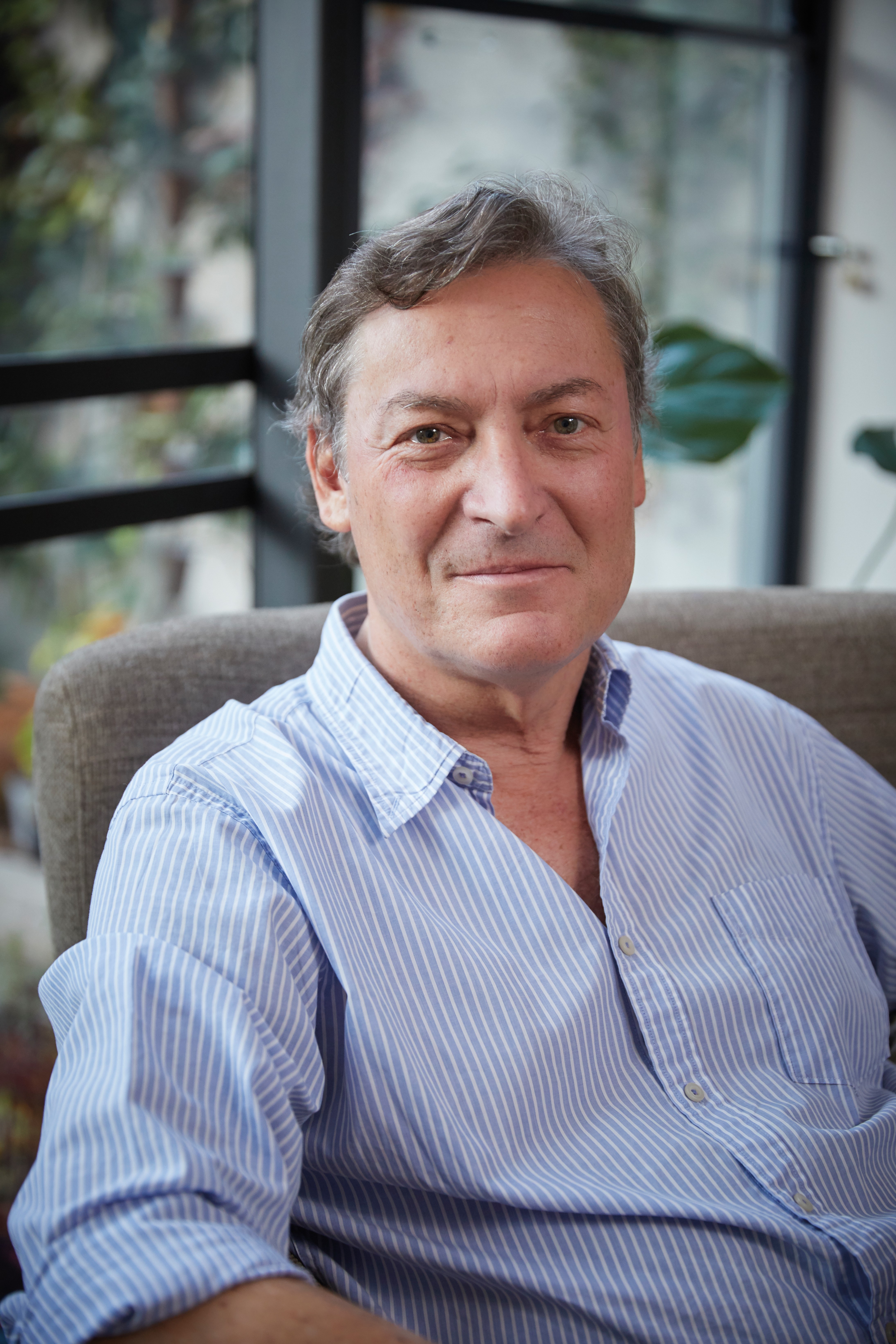
Born in Roundhay, Leeds, in 1933, David was proud to be a Yorkshire lad and a Balliol man. He attended Bury Grammar School, where his father, Colin (Wadham, 1920), was History master. He showed early talent on the piano and played the organ at Heywood St Methodist Church. At Balliol he read Music, specialising in composition. In June 1954 his Overture to The Taming of the Shrew had its première in the Holywell Music Room, conducted by ‘Tod’ (Vernon) Handley (1952); Sinfonietta, dedicated to Olga, his girlfriend-soon-to-be-wife, had its première in Oxford Town Hall, conducted by Professor (later) Sir Jack Westrup (1922). 

After graduation, David took up a position as Music master at Huddersfield College, subsequently Huddersfield New College. In 1963, he was appointed Senior Lecturer heading the Music Department at Homerton College, Cambridge. These were halcyon days for the Homerton BEd music degree, which achieved a new dynamic status for creative music at the heart of the curriculum in schools throughout East Anglia and beyond. He took early retirement in 1985 to refocus on composition. 

In the 1970s David had begun experimenting with recording skylarks. In the plain-looking songbird he found his muse. Using a 4-speed Revox tape recorder, he slowed down Victor C. Lewis’ vinyl recording of a skylark singing in Herefordshire on 12.6.69, 16 times. Then he notated what he heard onto manuscript, revealing a song of 200 notes per second ‘not bound by scale or beat’ that includes ‘trills and glissandi curving in microtonal pitch’ and is ‘through-composed’ having ‘themes’ which periodically recur with ‘improvisatory passages’ that ‘develop’ motif, shape and pattern. In the 1990 BBC television Q.E.D. programme ‘A Man Who Writes Birdsong’, David called the skylark ‘the Beethoven of birds’. From the notated song he composed ‘TRANSCRIPTION: Alauda arvensis 12.6.69 for piano solo’. A virtuoso performer being unavailable, David transcribed it for computer synthesised performance. 

David was a man ahead of his time. He explored the crossover between music and wildlife sound recording before zoomusicology had a name. A Greenpeace supporter from the early days, he composed the song of the extinct New Zealand Huia for BirdLife International’s 1992 Lifesong CD, raising concern for endangered bird species only now being taken seriously. Fifty years on from Lewis’ skylark recording, Rolf Hind premièred David’s ‘Three Songs for Piano’, inspired by the woodlark, nightingale and skylark, at the David Hindley Memorial Concert on 16 June 2019. 

David is survived by Olga, his daughters Karen and Jo, and his grandson Theo.

Peter Wetherall

1978, BA PPE
13 July 1956 — 11 September 2018

Chris Start (1977) 

Peter WetherallBorn in 1956, Peter died of cancer on 11 September 2018 in Melbourne. Two weeks later, hundreds gathered for a celebration of Peter’s life to share their memories. 
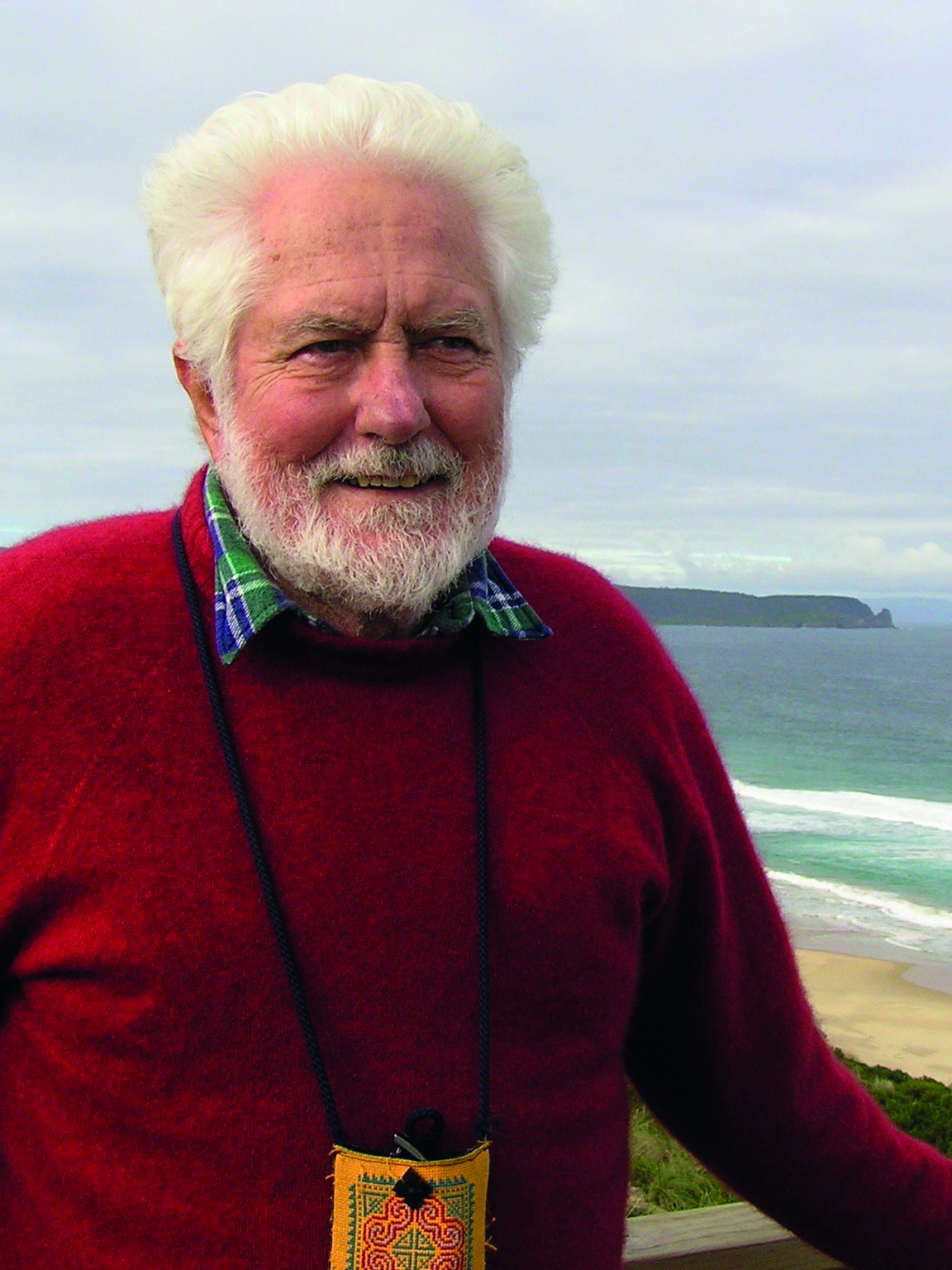
‘I am so proud of the person Peter was, and I would just like to take a few moments to tell you why,’ were the opening words, from Peter’s son Harry. He concluded with his Dad’s last visit to Oxford, two months before he died, to support Harry’s desire to study here: ‘a man who refused to complain about his condition, who flew to the other side of the world in great pain, just to help me achieve my dreams . . . because for him it was what you do for your kids.’ 

I recalled Peter at Balliol (rugby, rowing, JCR Treasurer, his genius for econometrics and toga Photograph by Stav Sakellaris parties) and that we had been close friends for 40 years. I last saw Peter in June. He knew he was dying, but still, like all good Balliol folk, we reminisced, we laughed and we put the world to rights. ‘All of us here today are the lucky ones; lucky to be able to say we knew Peter Wetherall,’ said Mark Cubit, a colleague and friend for 30 years. Greg Marks worked at Wallara Asset Management, which Peter founded and built into an industry leader: ‘Peter’s style was to lead by example. He didn’t tell you what to do; he set the benchmark.’ Greg also spoke of Peter’s decision to close the firm after almost two decades, ‘As usual, after serious consideration, he made the right decision.’ He continued, ‘And then Peter looked after the staff.’ 

Lin Bender, of the Helen Macpherson-Smith Trust, described Peter (who read PPE) as ‘a true Renaissance man, a Rhodes Scholar, a brilliant writer, a polymath’ and spoke for all: ‘We greatly miss Peter’s intellect, talent, compassion, humour, wise counsel and above all his friendship.’ Deborah Taylor, his wife of 30 years, and Ann Chapman, a friend during his Balliol days and his partner in recent years, spoke graciously and movingly of their loss. Deborah quoted Byron: ‘the heart must pause to breathe,/And love itself have rest.’ Ann shared that she was ‘honoured and privileged to love and care for him in the last phase of his life’. 

Harry said, ‘What I’m really proud of is the way Dad treated other people.’ Everyone agreed, and that is what made his life a life worth celebrating.

Photo: Photograph by Stav Sakellaris.

Graham Bond

1961, BA PPE
06 May 1937 — 17 August 2018

Monique Bond 

Graham BondBorn on 5 May 1937, in Wondai Qld, Graham represented Australia in gymnastics at the 1956 Melbourne Olympics and studied at the University of Queensland (BE Mining, First Class Honours 1959). In 1960 he represented Australia at the Rome Olympics. He was awarded a Rhodes Scholarship to Oxford, where he read PPE at Balliol. Through PPE he developed a long lasting interest in economics, particularly in the gaps between the rich and the poor. Graham made many lifelong friends in Britain, including a French girl whom he met whilst visiting an Australian friend. They kept on meeting each other and after finishing their final exams in 1963 Monique Nalder Béliard (Somerville, 1960) and Graham Bond were married in London and sailed to Australia. 
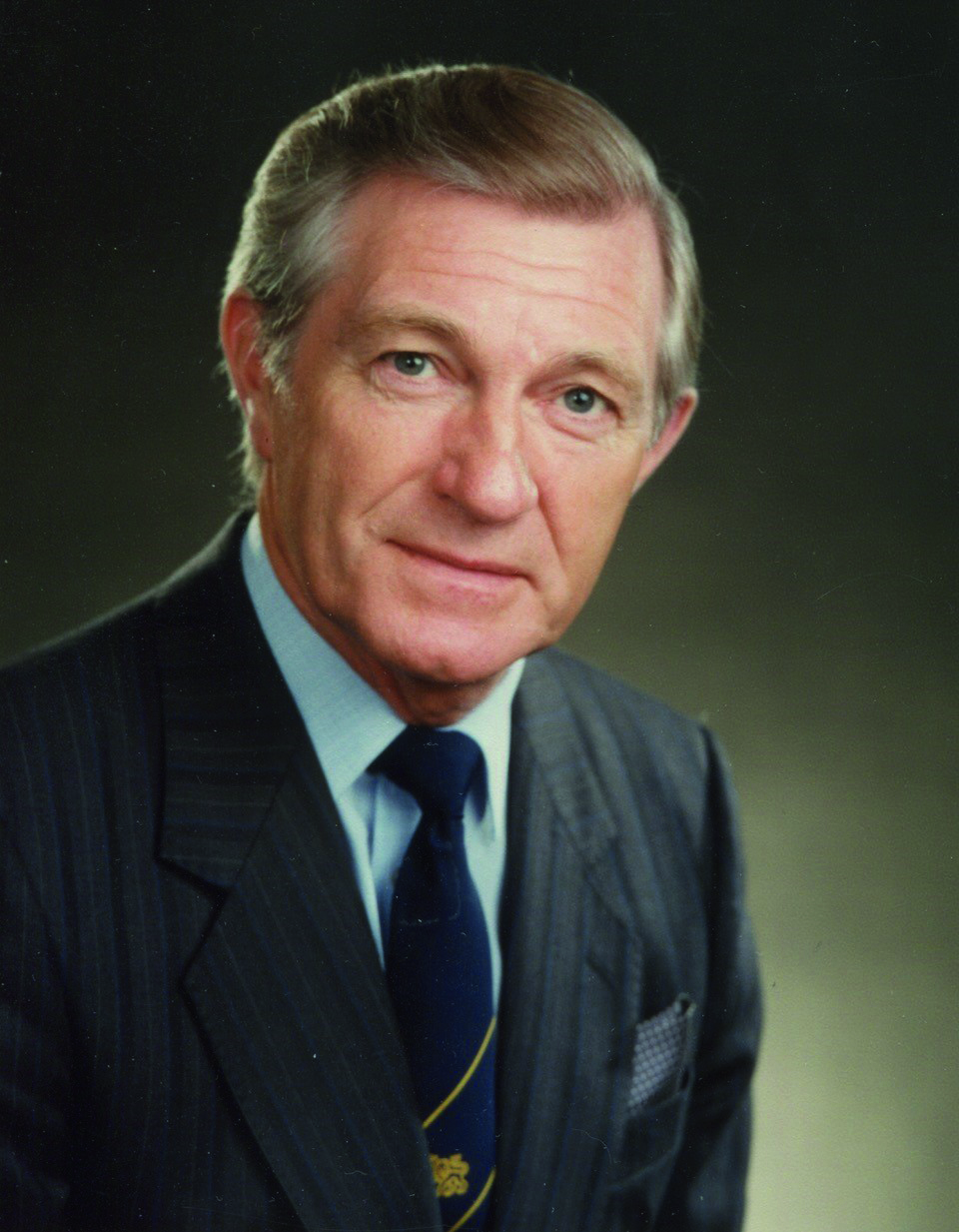
In 1964 Graham captained the Australian gymnastics team for the Tokyo Olympics, and he and Monique had their first child. His PhD on mine ventilation networks led him to consultancy work. In 1969, Graham, Monique and their three children went to England, where Graham worked with PA Consultants. Life was interesting at work – Graham enjoyed solving problems, especially those which needed mathematics – and at home there were interesting trips, making furniture for the children and visiting Monique’s relations in France, Italy and Switzerland. 

In 1975 Graham suggested returning to Australia to spend time with his parents. In 1976, the family set off via Munich to Austria, Italy, Yugoslavia, Greece, Turkey, Iran, Afghanistan, Pakistan and India. They had some tricky moments but Graham’s calm attitude and the friendliness of the children gained them warm welcomes almost everywhere. 

In Brisbane, Graham joined QCOM, a computer company, and spent many years solving problems, building IT programs and developing as the industry itself developed. Ten acres in the Sunshine Coast Hinterland, fondly called ‘Bondage’, gave Graham and Monique a great deal of satisfying physical work to do as they cleared lantana and planted native timber and wildlife habitat trees. 

But age caught up with Bondy and Bondage was sold in 2011. That meant more focus on the choir, Songlines. Graham and Monique both enjoyed singing at gigs such as Sorry Day, rallies for refugees and Stop Domestic Violence Week. In his last days, Graham liked to sing with anyone who was there. On 17 August 2018, as family members welcomed in the dawn with a favourite song, Graham quietly left this world.

Philip Creighton

1951, BA Modern History
18 May 1929 — 04 August 2018

Phyllis Creighton (his widow) 

Philip William Bruce Creighton, FCA, ODT, died at 89 on 4 August 2018 in South Muskoka Memorial Hospital, Bracebridge. Born on 18 May 1929 in Toronto, he was educated at Jarvis Collegiate; Trinity College, University of 126 BALLIOL COLLEGE ANNUAL RECORD 2018 Toronto, and Balliol. A chartered accountant, he worked in Thorne, Mulholland, Howson, and MacPherson and Clarkson Gordon. A creative communicator, Phil did continuing education for the Institute of Chartered Accountants of Ontario (ICAO), and served on its council. He co-founded Caron Creighton, and later taught accounting at Centennial College, and then at Wilfred Laurier University in Waterloo, the University of Toronto, and York University. He was always liked by his students. He maintained his own practice, focusing on religious institutions and not-for-profits, until October 2016. 

Phil was an accomplished author, penning articles for journals as various as the York Pioneer and the Financial Post. Commissioned by the ICAO for its centennial, he wrote A Sum of Yesterdays: A History of the Institute of Chartered Accountants of Ontario (1984), an engaging book lauded in the Canadian Historical Review as largely a masterful and eloquent history of business in Canada. He contributed 16 entries to the Dictionary of Canadian Biography. 

A man of integrity and faith, he served in many capacities in the Anglican Church of St Philip-the-Apostle over 40 years and on the board of its Community Resource Centre, at the diocesan Aurora Centre, and on the ecumenical Task Force on the Churches and Corporate Social Responsibility, as well as the diocesan audit review committee, and he was made a member of the Order of the Diocese of Toronto in 2013. He loved his dogs and cats; Muskoka and the cottage with his family; his garden; gourmet cooking; art, books, music, opera, ballet, and theatre. Witty, perceptive, gentle, inimitable, he is deeply missed by all his family.

James Cadzow Smith CBE FREng FRSE

Foundation Fellow from 1993
28 November 1927 — 10 July 2018

Paul Buckley (Emeritus Fellow) 

James Cadzow SmithJames Smith was an engineer whose career started with an engineering apprenticeship in Edinburgh, and later saw him at the helm of one of the UK’s largest electricity supply companies. 
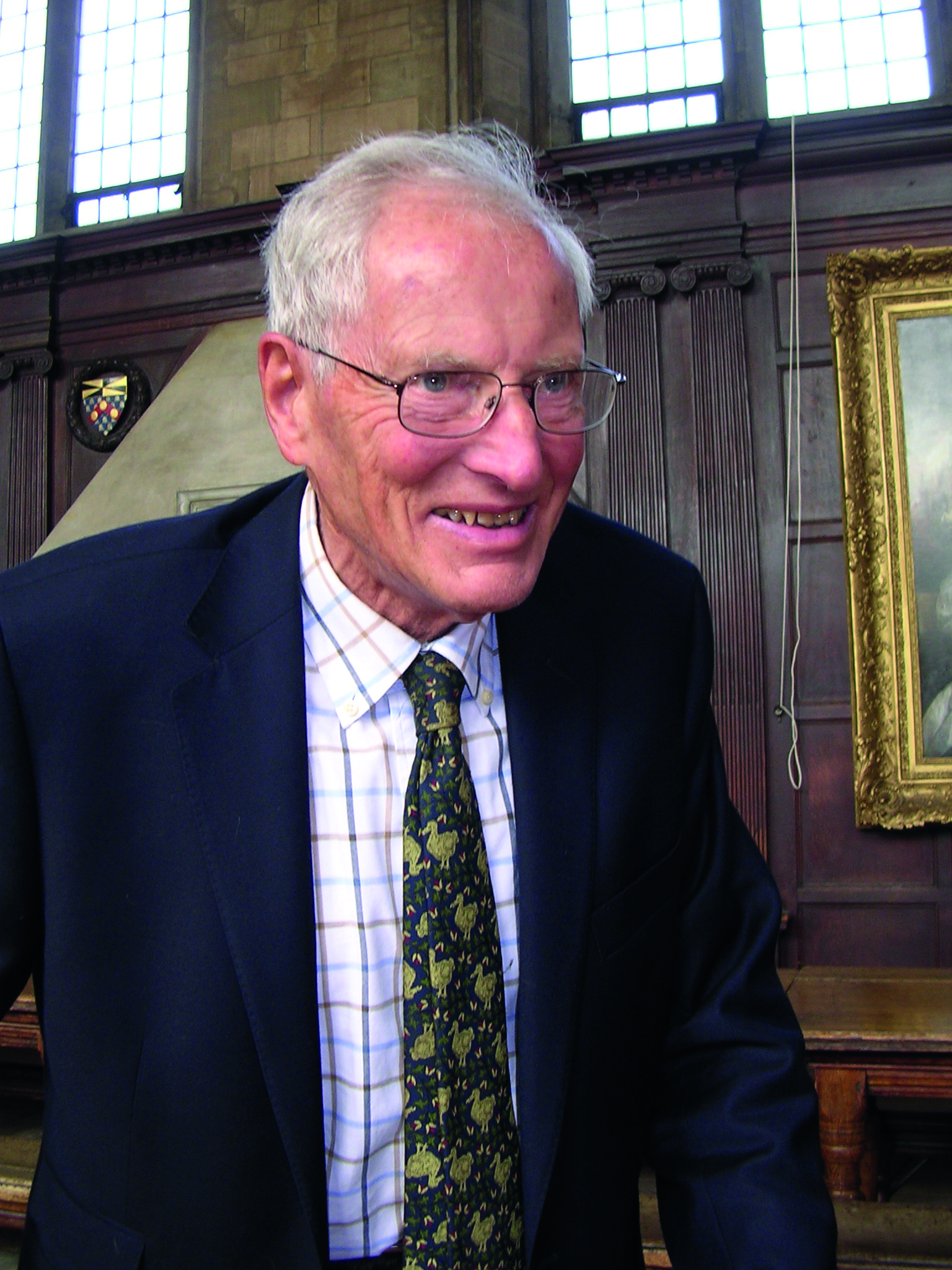
James’s first jobs were at sea, in the merchant navy as a marine engineer: he became Chief Engineer of a large merchant vessel. He later said this experience was vital preparation for his future roles in management of large engineering enterprises. 

After some years at sea, James switched his attention to the then recently nationalised electricity generation industry. It was a logical progression, as he saw it, both industries being so dependent on steam turbines. He moved in 1952 Photograph by courtesy of Elaine Smith. to the forerunner of the South of Scotland Electricity Board, and after that he worked in power generation in the Midlands, before being appointed in 1973 as Director of Engineering and then Chief Executive of the Northern Ireland Electricity Service (1975–1977). This was a huge responsibility for him, being only in his forties. From there he went on to be Chairman, first of the East Midlands Electricity Board (1977–1982) and then of the Eastern Electricity Board (1982–1990). He was an effective leader; and this even reached the popular press. When a severe storm wreaked havoc across large parts of East Anglia in October 1987, leaving over 250,000 homes without electricity, local newspapers remarked on how swiftly the company intervened, drafting in help from across the country and restoring supplies quickly. It was reported that James received a personal ‘thank you’ from the government’s Energy Secretary, Cecil Parkinson. 

By now James was a prominent figure in the electricity supply industry, and he received numerous honours during this period – to mention a few: Fellow of the Royal Society of Edinburgh (1981), Freeman of the City of London (1984), Fellow of the Royal Academy of Engineering (1988), and CBE (1989). He was awarded an honorary doctorate (LLD) by Strathclyde University (1988) and he served as President of the Institution of Electrical Engineers (1989–1990). 

Then came the Thatcher government’s privatisation of the electricity supply industry. As a senior industry figure, James played an influential role in representing the new electricity supply companies in their negotiations with government on details of the deal. Hence, in 1990 the Eastern Electricity Board became a company, Eastern Electricity, with James serving initially as both Chairman and CEO. He relinquished the CEO role in 1993, and f inally retired from the company as Chairman in 1995. His contribution to the industry had been immense. Eastern Electricity was the largest electricity supply company in England, in terms of numbers of customers. It was later renamed Eastern Group and was eventually bought by Hanson plc. James was passionate in his belief in the importance of engineering to the nation’s prosperity. He was also far-sighted, urging recognition of the potential of electricity for solving the world’s mounting environmental problems. He pursued his interest in the environment actively after retirement from Eastern Group, serving as Chairman of the Natural Environment Research Council (1997–2000). Another of James’s great interests in retirement was the work of the engineers’ Livery Company: the Worshipful Company of Engineers. He had originally joined in 1984, and he served as Master of the Company in 1997–1998. He later described how he worked hard during that year to improve links between the City financial institutions and the practice of engineering. 

After privatisation, with Eastern Electricity an independent private company, James was keen to develop its commitment to research, and to education of the next generation of professional electrical engineers. Having got to know Balliol through mutual acquaintances, he was inspired to realise this goal through Balliol’s commitment to engineering, and to seek means of developing links between his company and the College. Under James’s leadership this resulted, in 1993, in Eastern Electricity endowing a Fellowship in Engineering at Balliol, now named the Eastern Electricity Fellowship. The current holder of the Fellowship is Professor Dominic O’Brien. James also made generous personal donations to the College. 

At this time, Balliol was growing its development activities, and one of the steps taken was to establish a new kind of Fellowship – a Foundation Fellowship – to recognise and thank major benefactors. James was elected in 1993 as one of the College’s first Foundation Fellows. His contribution was also recognised by the University and he was appointed to the Chancellor’s Court of Benefactors. 

James clearly treasured his link with Balliol and the University. In 1995 he gave the Department of Engineering Science’s annual public lecture – the Maurice Lubbock Memorial Lecture. He helped with continued College fundraising by serving on the Balliol Campaign Board. He was a regular attender at College events such as the annual Snell Dinner. I recall many a stimulating conversation with him over a drink in the Buttery. Through his eighties he remained sharp and original in his observations, and not without a sense of humour. Always inspiring for those of us with a stake in the subject were his enthusiasm and optimism for engineering’s contribution to society. He encouraged us tutors through the interest he showed in engineering at Balliol: our students, our teaching, and the research we were pursuing. 

However, conversations with James were certainly not confined to engineering. He was a man with wide interests beyond his profession. He clearly had a special passion for walking and mountaineering, and he loved music and drama. His church was also important to him. Alastair Howatson, Emeritus Fellow and fellow Scot, has described him as a ‘thoughtful churchman, in the Presbyterian tradition’. 

In his 90th year James succumbed to illness and he died on 10 July 2018. He had made major contributions to the College. Perhaps the most obvious is the significant funding that he brought in. This will help assure the future of engineering as a strand of the College’s teaching, and contribution to intellectual life more generally, for years to come. But in addition, his personal support was greatly valued. Engineering is a practical subject, concerned with meeting everyday needs of real people. The academic world facilitates it through teaching and research, but it is practised in the world of industry, technology and the built environment, including factories and power stations such as those James managed. He brought to the College and University a rich experience of success in business and engineering practice that was a less tangible but no less valuable contribution. He is sadly missed.

Photo: Photograph by courtesy of Elaine Smith.

John Prest

Fellow and Tutor in Modern History 1954–1996 and Emeritus Fellow from 1996
18 September 1928 — 03 July 2018

Sir Colin Lucas (Master 1994–2001 and Honorary Fellow) 

John PrestAs senior history Fellow, John Prest was my direct colleague throughout my time as a tutor in Balliol. My previous jobs had been in traditional history departments where dominant professors told junior lecturers what to do and meetings had all the vigour of Japanese Noh theatre. So, it was a great relief to find that Balliol was not like that. John and I easily agreed to split the post-1700 teaching between us – British History to him and the rest to me (including the infuriating de Tocqueville). Thereafter, he left me to get on with it without comment. Of course, John took charge when occasion demanded it (at entrance examination time, for instance, and later as Senior Fellow in College). But this never came across as an exercise of power or the pursuit of a personal agenda; rather, he just did what it fell to him to do. 

John was certainly a College man, caring for its welfare in a quiet way and concerned for its good order and success. When as Senior Fellow he presided over the process that resulted in the election of Master Blumberg, he received an application for the position from a woman from one of the prairie provinces of Canada. Instead of quietly shelving her materials as being outside our criteria, which they were, and which would have been a course of action suited to a certain stereotypical image of an instinctively male and conservative Oxford, he engaged in a courteous and quietly amusing exchange of correspondence with her, carefully reporting the whole in considerable detail to the assembled Fellows. This was John at his best. He had understood that the applicant was quietly poking fun at us as well as challenging the stereotype; he had gracefully enfolded both of those things, and, I am sure, derived private amusement from twitting his colleagues with his solemn reports. 

John was not an easy man to get to know. He was simply private rather than stand-offish. On occasion, he and I would park our cars at the same time in the morning at the Master’s Field. John would be instantly striding off to College at a pace worthy of the Rifle Regiment in full cry. It wasn’t that he was fleeing; it was simply that a conversational saunter was not in his nature. He was a man of principles, but he did not make a loud display of them; he was a religious man, but not gratingly pious; he was serious but, as I have said, far from devoid of humour. Frivolity would not have become him, but he was perfectly willing to be a speaker at the riotously inchoate Arnold and Brackenbury Society. Every tutor suits some undergraduates and not others. John always had a loyal group who liked his matter-of fact style, his reliability and his non-judgemental temperament. 

I did have occasion to see him from closer up. Invited to a weekend lunch at home in Wheatley, I found him in his exceptional garden (Balliol gardens long benefited John Prest speaking at his 80th birthday party in Balliol Hall (photo courtesy of the Prest family). from his talent), an affable, indulgent man, affectionately teased by his young daughter. 

John could always take you by surprise, just not being what you’d expect. Perhaps especially so in his accidents. Possibly moved by school-day memories from soccer-playing Bradfield College, he volunteered at a mature age for an SCR–JCR football match. Within seconds (or at least in the telling of it), he had to be stretchered off with a broken leg. Much later, perhaps in his upper 70s, he fell out of a tree he was tending in his garden and for a while, we despaired of his survival. Subsequently, a public report on curious medical statistics (anonymised, of course) stated that during the year two men aged over 75 had been hospitalised after falling out of trees. For once, on reading such a report, I could say with private satisfaction: ‘I know who one of those was!’

Simon Skinner (Keen Fellow and Tutor in History) 

John Prest was a prolific and eminent historian chiefly of the high and low politics of 19th-century Britain, with hinterlands which both enriched his mainstream writing and occasionally took him beyond the typical range of academic specialism. 

His first book, which perhaps reflected his year’s experience working for the General Electric Company, as well as the influence of his Cambridge tutor Eric Hobsbawm, was a slight and idiosyncratic Oxford University Press monograph on The Industrial Revolution in Coventry (1960). But it was a trinity of acclaimed books on 19th-century British politics which established Prest’s professional reputation. His in-every-sense-heavyweight (574-page) biography of Lord John Russell (Macmillan, 1972) was notable for its characteristically exhaustive research, but also for its repudiation of the hagiography in previous treatments, and it is striking that it remains the standard biography of a major figure nearly half a century later. Politics in the Age of Cobden (Oxford University Press, 1977), with its titular retort to Norman Gash’s earlier Politics in the Age of Peel, was a highly original and granular recovery of the importance of registration, and therefore of extra-parliamentary politics, in the post-1832 period. His Liberty and Locality: Parliament, Permissive Legislation, and Ratepayers’ Democracies in the Nineteenth Century (Oxford University Press, 1990) sustained Prest’s exploration of the relationship between high and low politics, recovering the ways in which permissive legislation facilitated local initiatives and debate, and thereby subverting the centralisation narratives which were a commonplace in the field. When the Oxford Dictionary of National Biography was overhauled in the 1990s, Prest contributed magisterial and lengthy portraits both of Russell and of Peel. He therefore contributed enormous scholarly authority to Oxford’s Modern British History Seminar in the later 20th century, alongside his eminent co-convenors Colin Matthew and Ross McKibbin. 

Prest’s institutional affiliations generated a number of attendant historical projects. On the College’s history he edited a volume of Balliol Studies (1982) containing essays by Christopher Hill (Master 1965–1978) and Anthony Kenny (Master 1978–1989) among others, as well as the rich and surprising Dear Miss Nightingale: A Selection of Benjamin Jowett’s Letters to Florence Nightingale 1860–1893 (with Vincent Quinn, 1987). Prest also wrote the definitive scholarly treatment of Balliol’s late-Victorian pre-eminence in the multi-volume History of the University of Oxford. On University history he edited and contributed to the popular and widely noticed single-volume Illustrated History of Oxford University (1993), which ran through numerous editions. The Times Literary Supplement observed that while academics continued to await the eight-volume history of the University, everyone else ‘will settle for this resplendent account in one book’. 

Personally, Prest’s passion for horticulture found direct expression not only in his celebrated walled garden in Wheatley, featured in the media and in the National Gardens Scheme, but also in a richly illustrated book from Yale University Press entitled The Garden of Eden: The Botanic Garden and the Re-Creation of Paradise (1981). A broad analysis of the development of the botanical garden in late-Renaissance Europe as an attempt to realise visions of Eden, it included discussions of the famous gardens of Paris, Oxford, and Uppsala, and was reissued in paperback in 1988. Prest’s local interests also generated a slim volume written in retirement to mark the 150th anniversary of the building of the new church of St Mary the Virgin, Wheatley (where the current prime minister was married), entitled The Most Difficult Village: Wheatley, England, and the Church (Nuffield Press, 2006). At retirement Prest commented to his successor that what he most looked forward to was more time to read, and he remained fertile long after, publishing a final book in 2015, The Lucky Martins, an account of the service of two of his maternal uncles in the Great War based on the letters and cards they sent home. 

Michelle Cale (1986) 

In 1986, I was part of the last cohort of Modern History undergraduates to sit Prelims at the end of our first term. In the latter part of Michaelmas, I was felled by a major bout of flu. I kept my door on the latch, so that my friends could visit. One afternoon, there was a knock on the door. My visitor was John Prest. I am not sure which of us was initially the most horrified to f ind me lying in bed: he or me. However, he quickly recovered and pulled up a chair to discuss how I was feeling about the upcoming exams. I was touched that he had taken the trouble to call on me. By the time John departed with a cheery and earnest assurance that everything would be fine, I was a paid-up member of the John Prest Fan Club. 

For Prelims, John Prest was our tutor for Bagehot’s English Constitution, my f irst real introduction to the Victorians. Later, he guided us all through English History III and me into a lifelong passion for 19th-century history. John was always a patient, enthusiastic supporter for my desire to study issues on the fringes of the received curriculum. I can picture him with his hands steepled together as he thought about how to get to the heart of a subject, then leaning forward with a ‘Now look . . .’ before setting out a challenging question for next week’s essay. Victorian housing, prisons and policing, women’s roles, the English seaside, and more: for all these topics, far removed from the standard fare of Gladstone and Disraeli, John was able to recite substantial reading lists without hesitation. His knowledge of Victorian history was prodigious, but always displayed with kindness and humility. I fondly remember how he would stalk around his room pulling books off the shelf for me to take away at the end of each tutorial; in particular, I remember answering a summons to collect his copy of The History and Social Influence of the Potato by Redcliffe Salaman, which he thought I might enjoy as an aspiring creator of ‘history from below’. 

When John learned that I planned to work in market research after college, he asked me why I wasn’t planning to do a DPhil – something I had not considered. He helped me think about my general focus and, when I landed on Victorian crime and punishment, he asked Roger Hood of All Souls to be my supervisor. As my thesis progressed, John continued to be a mentor, reading chapters from time to time and finally the whole thing shortly before submission. He was an honest, but constructive and kind, critic of my work. 

John Prest was the epitome of a don who cared for and had pride in his students. I am immensely glad I had the chance to know and learn from him.

Photo: John Prest speaking at his 80th birthday party in Balliol Hall (photo courtesy of the Prest family).

Jens Roesner

1972, BA PPE
25 August 1949 — 19 June 2018

Andrew Thompson (1972) 

Jens Roesner, a great friend and fellow Balliol PPE student, died in Ayr, Scotland, on 19 June 2018 of cancer. He will have been most annoyed at failing to see the World Cup right through to the finals, though he was happy to discuss football tactics from his hospital bed. Some of his Balliol friends managed to get the German jersey on to his coffin and to drink to his health.

Sarah Jane Jarvis

1987, BA PPE
11 September 1968 — 07 March 2018

Noo Jones (1987) 

Sarah died on 7 March this year after a long struggle with depression. An Exhibitioner, Sarah enjoyed her time studying PPE at Balliol and had fond memories of her tutors, particularly Andrew Graham (Master 2001–2011), Adam Swift (1980, Fellow and Tutor in Politics and Sociology 1988–2013) and Sudhir Hazareesingh (1981, Fellow and Tutor in Politics). She completed her PhD in Economics at the European University Institute in Florence, focusing on post-Soviet-era child benefit, before doing postdoctoral research at the University of Essex. Later she qualified as a homeopath and volunteered at a local hospice, where her warmth and kindness were greatly appreciated. 

Sarah loved people and had a gift for creating fun and laughter without needing to be the centre of attention. She was a gentle and forgiving soul who thrived in community and relationship to others; she was an integral part of a number of women’s groups and a wonderful friend to many. 

She is survived by her three daughters and two stepchildren, to whom she was devoted and who brought her immense joy. Sarah’s wish was that we remember her in happy times. Those of us who were fortunate enough to call her a friend have many such memories.