Obituaries

This page honours and celebrates the lives of Old Members, academics, staff, and friends of Balliol. We hope it will provide a lasting and accessible record of those connected to the College, while also offering a space for reflection and remembrance of their achievements, contributions, friendships, and the many ways in which they shaped the life of Balliol and the wider world.

The obituaries currently available on this page have been drawn from previous editions of the Annual Record, as well as from publicly available obituaries published elsewhere online. This page is still in development, and we hope over time to build a more comprehensive record.

If you would like to submit an obituary of a Balliol member, please contact the Development Office at: development.​office@​balliol.​ox.​ac.​uk.

Jeremy Strathdene

1948, BA Literae Humaniores
22 October 1930 — 01 February 2022

Helena Hawthorn (1998), daughter

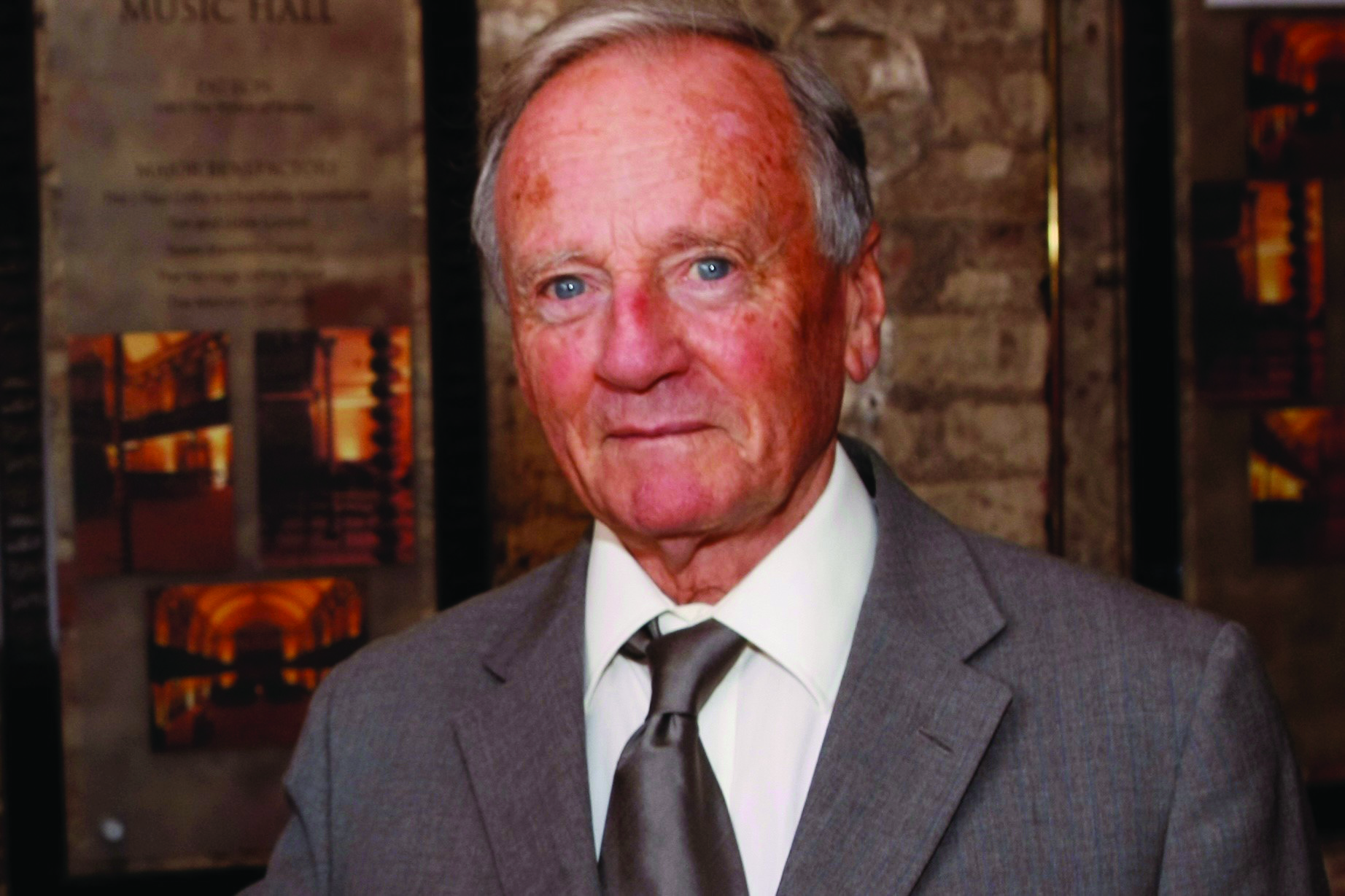
Jeremy StrathdeneJeremy Strathdene was born in Huyton in 1930, the son of a Jewish refugee escaping Russian pogroms in Elizabethgrad (now in Ukraine) and a Lancashire manufacturer’s daughter. His father, assimilated into English life as a clergyman and Labour council chairman, prized learning above all. So, perhaps unsurprisingly, it was at Balliol that Jeremy’s sense of belonging was rooted. 

After his schooling at Liverpool College, he won a scholarship to Harrow. In 1948, he came to Balliol to read Classics (Domus Exhibitioner). 

He recounted how extraordinary the College was then – mixing boys fresh from school with men who had served in the Second World War. He was proud that Balliol took equal numbers from public and grammar/county schools and sought to mix those sectors together when allocating rooms. He was less proud that Balliol was so late to admit women . . . One of his greatest joys was the Balliol Players. He gleefully described travelling between schools in a furniture van, sleeping on camp beds – his joy in the adventure combined with his pleasure in bringing Greek plays to those who might otherwise never have a chance to know them. 

After leaving Balliol he was called to the Bar (winning a scholarship to the Inner Temple and coming top in his year in Bar Finals) and completed his National Service, before joining BP. His lifelong curiosity about the world and ideas was evident from his glamorous list of overseas postings (and the books he collected on his travels). He spent the 1960s and 1970s in Athens, New York, Paris, Brussels, Tokyo and London, often close to significant events as they unfurled. In the 1980s he was seconded to the Department for Environment to develop ideas for urban regeneration under Michael Heseltine – a challenge he enjoyed despite his antipathy for Heseltine’s boss. 

He retired in 1985, relishing his role as full-time parent. Jeremy’s enduring fondness for Balliol, and its importance in his life, is demonstrated by the enjoyment he took in my brother Mark (1994) and me studying there ourselves. This excuse to pop into College meant our friends quickly took his cameo appearances as a natural part of Balliol life. 

A devoted husband of 49 years to Mary Ann, his greatest joy in recent years came from inculcating in his grandchildren Penelope and Gus his love of learning. He died in February 2022 after a short illness.


Professor Emmanuel Tumusiime-Mutebile

1974, BLitt Economics
27 January 1949 — 23 January 2022

Professor Paul Collier (Professor of Economics and Public Policy, Blavatnik School of Government) 

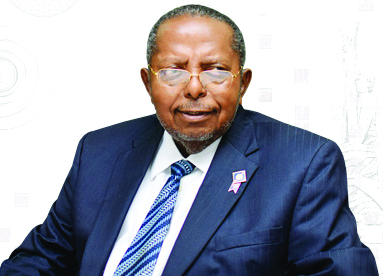
In the death of Emmanuel Tumusiime-Mutebile, Governor of the Central Bank of Uganda, Africa has lost a towering figure central to both his nation’s economic revival from the tragedy of the first decades of Independence, and by his power of example, the gradual recovery of other countries in the region. 

Emmanuel was a fine economist, but his key abilities were personal courage and leadership. His used his courage to speak truth to power. He used his charismatic leadership to inspire his staff to turn themselves into professionals with the integrity and skills to manage the complex challenges needed for a poor and fragile society to escape mass poverty. 

He showed his courage against the tyrant Idi Amin by condemning his expulsion of the Asians while being interviewed on the radio; having then to f lee the country in disguise. He found that same courage in his re-encounter with Yoweri Museveni. Museveni had led an insurgent group that seized the capital. Finding Emmanuel, once a fellow student, now chief economist at the Ministry of Planning, the new President promptly ordered him to stop the rampant inflation by revaluing the official exchange rate. patiently why piece this of Emmanuel explained common economic illiteracy would not work, only to be overruled by his overconfident new boss. Emmanuel’s retort was ‘Yes Mr President, but will you permit me to remind you when you have to reverse it that I told you it was wrong.’ Museveni’s greatness was that he did not treat this remark as insubordination, and his subsequent decision to reverse the policy was a first step on a six-year road to realising that key economic policies must be left to Emmanuel. By 1994, their partnership had overseen a sequence of tough and well-implemented decisions just in time to take advantage of a coffee-boom which laid the foundations of a vibrant private sector. 

By 2002 his team at the Ministry of Finance and Planning were well equipped to take over its leadership, and he moved to be Governor of the Central Bank, where he remained until his death, rapidly becoming the father f igure for his beleaguered peers in the region, radiating courage and wise counsel with skewering humour. 

By the time of his death, he was a living legend: an anchor at a time of very rough seas for the region. By design, he leaves an institution which abounds in qualified future Governors, but as a rare man of greatness, he is irreplaceable. We had been warm friends for 30 years and I grieve at his passing.

Dr Piers Nye

Fellow and Tutor in Physiological Sciences 1991–2011 and Emeritus Fellow from 2011
10 May 1946 — 10 December 2021

Robin Choudhury (1986 and Professor of Cardiovascular Medicine and Senior Research Fellow in Biomedical Sciences) 

Athar Yawar (1994) 

Piers NyePiers Nye was Tutorial Fellow in Physiological Sciences at Balliol from 1991 to 2011 and an Emeritus Fellow until his death in December 2021, having earlier been College Lecturer in Physiology at Balliol (1984 to 1987), a Wellcome Trust Senior Lecturer (1984 to 1991), and then a University Lecturer in Physiology. Piers was the University’s course Director for Physiology from 1998 to 2011. He continued his teaching beyond his retirement in 2011 to lecture in physiology to Human Sciences students. He remained devoted to his students, writing his final reference, and marking his last essay, a few weeks before his death. He was instrumental in backing the newly established Balliol Medical Society (founded 1992) and was a loyal and typically enthusiastic Senior Member. 

Piers was born in Perth, Scotland. His father was an insurance executive with a passion for the theatre. After Piers’s mother died when he was 14, he was brought up in Aldeburgh by Janet, one of his three older sisters, and her husband Ian Tait, both general practitioners. Hoping ‘to feed the world’, he came to Pembroke College, Oxford, to read agriculture in 1965. He was sent by his tutor to spend one summer vacation in Swaziland, during its transition to independence. He spent his time taking soil samples, and having experiences which gave him a lifetime’s supply of stories. 

In 1969, after hitch-hiking across the States, he ended up on the West Coast, and signed up at the University of California, Davis, where he studied under the eminent avian physiologist Ray Burger. There, he also kept goats, milking them into wine bottles so that they didn’t step in the bucket or get their hair in the milk. In 1977, he completed his doctorate and was awarded the Loren D. Carlson Prize in Physiology, for the student with the most promise of excellence in teaching and research. On his return to England later that year, Piers was hitch-hiking to a job interview in Bristol when, during a stopover in Oxford, he was persuaded to apply for a job there. Oxford became his home for more than forty years.

Piers was a respiratory physiologist. In Oxford from 1977, his work was funded by the Medical Research Council, and later (from 1983) by the Wellcome Trust. He worked on the regulation of breathing, and of blood flow through the lungs. He was particularly well known, and respected, for his work on the carotid body, a small organ in the neck that, in Piers’s phrase, ‘tastes arterial blood’ – sending nerve signals to the brainstem that in turn influence the pattern of breathing. He played an important role on the international stage in our understanding of the physiology of the arterial chemoreceptors (1984 1989), before switching his interest to pulmonary hypoxic vasoconstriction. Piers served on the editorial board of Respiratory Physiology for over twenty years and convened sessions on respiration for the Physiology Society. 

For those of us who remember Piers as a tutor and scientist (as we both do), it is impossible to think of him without also bringing to mind his laboratory. He joked that it was full of his homemade equipment, held together with ‘chewing gum and bits of string’. One extraordinary device, looking like a cross between a seesaw and a siege catapult, was his ‘ducking stool’: perfectly calibrated apparatus for testing the diving reflex, in which a person’s heart rate slows under water. Overspilling with books and papers and all manner of clicking machines and dials, Piers’s rooms in the University Laboratory of Physiology (ULP) gave colour to undergraduate tutorials in the presence of an authentic man of science. 

He brought to his teaching, and his science, the same clarity and transparency he brought to everyday interactions. Rather than getting lost in technicalities, he invited students to link academic physiology to simple, accessible questions: how can we tell, from the sound of its siren, where an ambulance is? How do people manage to thrive where the air is thin? He could turn knotty conundrums – sometimes several weeks of lectures – into elegant graphs and equations. He was fond of saying, tongue only partly in cheek, that the first term of preclinical medicine could be reduced to the Nernst Equation, and the second term to the oxyhaemoglobin dissociation curve (and, at a push, Ohm’s Law). He ran several undergraduate practical classes, including a mammalian physiology course from 1977 to 2001, as well as BM, Physiology and Human Sciences practical classes on the ECG, blood pressure and heart sounds, plethysmography and the conduction velocity of the ulnar nerve. Piers’s contributions were recognised by Oxford’s Medical Sciences Division with a Teaching Excellence Award in 2007, and a Teaching Excellence Lifetime Achievement Award in 2015 for his ‘high quality and sustained commitment to education demonstrated throughout his career’. 

Piers never behaved as though he were the smartest person in the room, but he knew a great deal about a wide range of things, and was terribly good at quite a few of them. His photography was used on Balliol College greetings cards; he acted in Shakespeare plays in California; he won an OxTALENT award for his computer software; he was an avid campaigner on human rights issues, notably with Amnesty International and the Prison Reform Trust. He was a member of the British Humanist Association. 

He did not hold himself to be wise, but was profoundly reflective, widely sympathetic, and suffused with a sense of wonder. Piers mentored a wide range of biological scientists and his pastoral duties at Balliol were substantial. For decades, he organised and spoke at events designed to broaden access to Oxford, encouraging women, people from minority and working-class backgrounds, and those with disabilities to apply. Throughout his time in Oxford, Piers actively promoted access to the University by state school candidates, especially those from schools with little or no history of applying to Oxbridge, speaking at official Oxford University access events. In recent years, Piers remained a champion of his former students’ achievements – for the Department of Physiology, Anatomy and Genetics’ campaign marking the 2020–2021 centenary of women’s full membership of Oxford University, ‘Women in Physiology, Anatomy and Genetics’, he contributed by far the most nominations to highlight the successes of the diverse women he has taught over the years. 

But, although his students have achieved much, and in very diverse fields, Piers was never merely concerned with achievement. He was genuinely interested in people; in understanding individuals, identifying their aspirations and potential, and in trying to see beyond external expectation. He went out of his way to nurture his students. On occasion, that might even entail a change of direction or course of study. Piers listened, and he was attentive. He also contributed much to the cohesion of the student body, whether that meant boisterous trips with current students to his favourite Al-Shami restaurant in Jericho, or through more formal channels in the College and the Medical Society. He could be gently indiscreet – recalling over finalists’ dinners (with mischievous crinkling of his eyes that marked the incipient smile) some f lawed answer to an interview question six years back; but he always intended to celebrate and elevate, and never to belittle. Neither of us can recall Piers saying anything unkind; but we can recall the occasional dry remark to puncture pomposity. He supported his students when they were flourishing, but even more when they were sick, or struggling, or lost. He belonged to the precious set of Oxford dons who are regarded with not only warmth and respect but also genuine affection. 

Piers met Rosie Painter when she was doing research into breathing at the ULP and they married in Balliol Chapel in 2003. Since his research was primarily about the carotid body, an organ that detects oxygen levels and is crucial to the control of breathing, it was a bitter irony that Piers should develop pulmonary fibrosis. He told almost no one, and continued tutoring and examining online through the pandemic. Some of his students organised a wonderful tea party for him in Balliol Fellows’ Garden in August 2021 to celebrate 30 years of teaching, and many continued to visit him at home afterwards. Piers is survived by Rosie; four children – Oscar and Lisa (from his first marriage to Mimi Maeda), and Hamish and Henry; and his granddaughters, Ruby and Maya. Piers is also survived by two sisters, Janet and Harriet, and by countless students and junior colleagues for whom he is irreplaceable.

Professor Ernst Wangermann

1946, BA Modern History, DPhil History
22 January 1925 — 26 November 2021

Professor Dr H.C. Hendrik Lehnert, FRCP, FACP Rector, and University-Professor Dr Christoph Kühberger, History Department, Paris Lodron University of Salzburg 

Ernst Wangermann was born on 22 January 1925 in Vienna, where he spent his childhood and early youth before his family was forced to emigrate to Great Britain in 1939. An essential prerequisite for his later professional focus as a historian was that he kept his German mother tongue and a deep emotional connection to his Austrian homeland during the period of emigration. Shaped by the stimulating intellectual climate at Oxford University, Ernst Wangermann decided during his studies to select a research area that would ultimately become his life’s work, Austrian enlightened absolutism. After teaching at the University of Leeds for decades, his long-sought-after return to Austria occurred in 1984 when he was appointed Professor at the University of Salzburg. 

It is difficult to imagine the historiography of the Habsburg Monarchy in the 18th century without Ernst Wangermann’s fundamental contributions. From his first major work From Joseph II to the Jacobin Trials (1959) to the brilliant study Die Waffen der Publizität: Zum Funktionswandel der Politischen Literatur unter Joseph II (2004), the range of his important book publications and numerous essays cover the era of the Austrian Enlightenment. Ernst Wangermann’s research was based on a fundamentally positive world view. He was firmly convinced that the radical thinking of the Austrian Enlightenment – despite its political failure – had in the long run provided essential and sustainable material for Austria’s path to modernity In the best British tradition, Ernst Wangermann’s commitment to teaching was characterised by very personal attention and intensive support. Even after retirement, his colloquia enjoyed great popularity among students. He died on 26 November 2021, at the age of 96. 

Reproduced by kind permission of the University of Salzburg.

Patrick Walsh

1974, BA Modern History
03 April 1955 — 24 November 2021

Ray Bremner (1975) 

Patrick WalshPatrick Walsh, popularly known as Paddy, died suddenly of a heart attack on 24 November 2021. 

He graduated in Modern History. Whilst at Balliol he served as a very enthusiastic Mr Picture Fund, with responsibility for arranging distribution of art pieces owned by the College which could be hung by undergraduates in their rooms. He was also an active member of the Academic Society and the Vic. Soc. 

After a brief flirtation with law school he joined the wine merchant Russell and McIver, where he worked for almost fifteen years. In 1980 he helped create the first edition of the Which? Wine Bar Guide, carrying out the first ever review of UK wine bars. 

He then decided to return to History and become a teacher. He did a PGCE and later a Master’s at the University of London Institute of Education, and taught at the Westcliff High School for Boys followed by Wolverhampton Girls’ High School (both state grammar schools). He was retired. He leaves a widow, Teri.

Alan Kingsley

1998, BPhil Philosophy, DPhil Philosophy
1 September 1975 — 23 November 2021

The Master’s Field 

For Alan Kingsley (1998), In Memoriam 

Carmen Bugan (2000) 

When our friend sent news about you 
Walking that final stretch of road, he asked 
If I would write, because he thought it best 
‘To be reminded of friends and happy times’.
 

Memories of the three of us playing like 
Children at recess in the Master’s Field 
Between lectures on poetry, philosophy, 
‘Aspects of structural design with glass’,

Walks at Christ Church Meadows,
Strolls through St Catherine’s Fields
And Magdalen’s Deer Park, wine
And mussels, chess and hearty laughter -


Flooded me with such force
That I felt at a loss to find
Comforting words to offer 
During your final days.


I remembered Mark’s wedding
In Adelaide, the vineyard, the two of us
Walking in Sydney’s Botanic Gardens,
With youth on our side. 


Exchanging news with you became
A heartbreaking game of wait and see.
No one learns how to die young. Now
That you have gone, we are gathering


To celebrate the ‘one of us’. You 
Brimming with smiles, always calm, 
Always thinking, then back to that inner smile
That kept us companionship in happy times.


*


Alan, you will hold the rest of us together
As much as memory does: gently and forever.
The picture of yourself you sent to me
Is of a boy playing on the floor with his father:


It’s one I have never seen. It’s a part of you 
I never met before, my dear friend – a parting gift?
The little boy’s eye light takes me by surprise
Like a wish half-fulfilled, or like a thought 

That barely touches the mind and leaves before
You have the chance to learn what it is. Tonight’s
Salmon sky surprised me in the garden, and, like your
Life, vanished before I could record it in my mind’s eye.


I see Mark and you in the Master’s Field at Balliol
In that moment before the Professor of Poetry’s Lecture,
When it was so hard to tear myself from our chasing game,
To go learn about the fields of just and perfect words.
 

Alan graduated from Balliol with a DPhil in Philosophy. The Kingsley project at the Bodleian Library has been working to digitise books from John Locke’s library in Alan's memory.

Alan Kingsley

Alan Kingsley (centre) with Dale Smith (1998, left), 
Mark Porter (1998, right) and friends at Balliol.

Brian Rutledge

1980, BA Engineering Science
25 March 1962 — 27 September 2021

Rutledge family 

As a tall sociable Geordie, Brian made a strong, friendly impression on everybody that he met during his time at Oxford and in his native North East. 

Born in 1962, he came up to Balliol in 1980 from Saint Cuthbert’s High School, Newcastle (then a grammar school), to study Engineering Science and he soon became well known throughout the College. He was a talented footballer, mainly on the left wing, and in addition to studying, he played for winning Blues teams every year he was at Oxford. He was a very popular member of each team and in his final year, when the captain was injured, Brian was chosen to lead the team out at Wembley. He also found time to play for Wycombe Wanderers and drove up and down the M40 in his brightly coloured Ford Capris. He entered fully into College life and was an enthusiastic member of the Harry Lime Society (during this period the Trinity College gates were painted fluorescent green). 

Brian was sponsored through his degree by the manufacturing company TI Churchill and on graduating he returned to work for them in the North East. He went on to work for the glass company Corning, and while there he managed the specialist production of the impressive glass sculpture and fountain that now stands in the Post Office Square Park, Boston, Massachusetts. He held several senior management positions in manufacturing companies in the North East and completed an MBA at Durham University. 

He married Susan in 1994 and they had three children, Hannah, Beth, and Aidan, of whom he was extremely proud. He was diagnosed with multiple sclerosis in the late 1990s and battled against the disease throughout. He continued to be a keen football fan, following Newcastle United and Gateshead. He always took a keen interest in developments at Balliol and the friends he had made at Oxford. As a wheelchair user in later years, he campaigned successfully, in his determined way, for improved access to public transport in the North East. 

He was diagnosed with cancer in early 2021 but he remained positive and was able to enjoy his daughter’s wedding and other social events with family and friends. Everyone had stories of ‘adventures’ that they had had with Brian (sometimes known as ‘Superman’) and he will always be remembered for enriching their lives. He passed away on 27 September 2021 surrounded by the love of his family. 


Edward James Mortimer CMG

1962, BA History and Honorary Fellow from 2004; Distinguished Fellow of All Souls College from 2013
22 December 1943 — 18 June 2021

The Rt Hon Lord Patten of Barnes CH (1962) 

Eulogy given at the funeral service held at Burford Church, Oxfordshire, on 9 July 2021 

Edward MortimerEdward was about six months older than me. I f irst met him at Balliol in Michaelmas Term in 1962. He was the first Etonian I had ever met, indeed one of the first boys I had met who had been to a boarding school. He was not entirely what I expected an Etonian to be. To borrow from the sermon in Beyond the Fringe, he was not a smooth man, indeed he was like Esau a decidedly hairy man. He had a great shock of then black hair crowning his tall slightly stooping frame. He was noisy, friendly, funny, charming and surprisingly clumsy (just how clumsy I was to discover later driving around America with him). And, as everyone who knew him found out very quickly, he was immensely clever, certainly the cleverest of my contemporaries, with a great memory and the ability to cut to the heart of complexity in pellucid prose or very direct, rather provocative questions. 

As luck would have it, we did some of our tutorials together. On medieval history with Maurice Keen (1954 and Fellow and Tutor in Modern History 1961–2000) – ‘Well, Mr Patten, you’re in luck, it’s Mr Mortimer’s turn to read us an essay.’ Or on the French Revolution with Richard Cobb (Fellow and Tutor in History 1963–1972), who was occasionally reduced by the blinding light of day, after what had clearly been a night before in which wine had been taken, to sitting in the twilight under his desk before sooner or later we all repaired to the Buttery for him to continue a denunciation of his customary objects of derision, Robespierre and the Master. 

We also sang Victorian music hall songs together, wrote what we thought were amusing articles for a magazine called Mesopotamia which was regularly closed down by the Proctors, and once a year we helped to write reviews based – it has to be said extremely loosely – on the plays of Aristophanes for the Balliol Players to tour schools and country houses during the long vacation. I remember that one year, performing at Shrewsbury School, where Edward’s brother Mark taught Classics for many years, Edward noted that the headmaster, Mr Wright, had the initials ARD. He put this to music: ‘I’m Arnold Ronald Donald and I’m right right right.’ The boys loved it. The headmaster did not love it. He wrote to the Dean of Balliol demanding a sentence without remission, which earned a polite letter of apology from the Dean and a message to us noting that he got the joke but didn’t think it was very funny. 

Edward invited me a couple of times for a weekend in Exeter, staying of course at the Bishop’s Palace. It was mostly great fun, though breakfast could be a bit intimidating as one sat there in the midst of a terrifying fusillade of classical puns relieved occasionally by Edward’s sister Kate with her throaty denunciation of classical one-upmanship. At the end of one weekend we went to evensong in the Cathedral and I remember afterwards on the way to the pub telling Edward how I envied members of the Church of England, being myself a Catholic of Irish extraction, the language of the Book of Common Prayer. He asked me to give an example and I mentioned the Nunc Dimittis which we had just heard – ‘Lord now lettest thou thy servant depart in peace according to thy word.’ When we got back to the Palace we had to rummage through his father’s library to find a translation of this Canticle of Simeon in the Roman breviary to ascertain to Edward’s satisfaction – always check your sources – that I was correct. I could not have known then that almost 60 years later I would be recalling this at Edward’s funeral. 

After our finals we went off to the United States together, having won what were then called Coolidge Atlantic Crossing Fellowships (now William Westerman Pathfinders awards). We travelled around America anticlockwise in a series of Hertz-rented Dodge Darts. This is when I got an intimate knowledge of Edward’s rather limited acquaintance with accuracy and distance in a car. We were driving through Ohio when President Johnson announced an increase in American forces in Vietnam. We were in Los Angeles at the time of the riots there. We were in Montgomery, Alabama, just after three students from Pennsylvania State University had been shot after taking part in civil rights demonstrations. I remember one occasion when our host, a courtly southerner, had to intervene to protect us from a group of rednecks in a milk bar, assuring them that we were not from Pennsylvania but from England and therefore just like the crowd in the bar.

At about this time we got the results of our exams. Edward had got a congratulatory first, the only one awarded that year, and decided he should cut short our time in America and return to Oxford to sit the All Souls Prize Fellowship exams. I decided that I would finish my time in America and in fact went on to work in a political campaign in New York for a Republican candidate; those were the days when Republicans were both moderate and internationalist. 

At that point, of course, Edward and I set off on careers which took us along different paths, even though they were sometimes running in parallel. Edward joined the journalist profession, a profession to which he brought honour. I moved into politics as a rather wet Whiggish Conservative (an almost extinct breed), a move which puzzled Edward almost as much as it surprised my wife to be. 

As a journalist both for The Times and the Financial Times, Edward pursued with his customary intellectual courage and ability the protection of human rights everywhere, the defence of those beleaguered and persecuted – from Tamils to Palestinians – and the promotion of the argument that international cooperation is invariably the best way to prevent and end conflict and to confront problems which are rarely circumscribed by national boundaries. 

Our careers occasionally brought us together, particularly when I was a European Commissioner and Edward was working for Kofi Annan and the United Nations, seeking an ethical path to the solution of global problems. For example, we found ourselves supporting the Norwegian drive for peace in Sri Lanka and taking a sceptical view of the work of the so-called quartet in its US-led search for Middle East peace. We both questioned whether America’s colleagues in this foursome, particularly the UN and the European Union, were doing any more than simply providing cover for whatever Washington wanted to do, which was not much. We both shared the view of Amr Moussa, the former Egyptian Minister of Foreign Affairs, that this organisation should be called the quartet sans trois. 

There are three things which for me clearly ran through Edward’s distinguished life as a journalist and as a public servant. They were all fundamental parts of the man himself. First, there was his belief in international cooperation, not least as the only way to deal with so many purportedly national problems which demanded cooperation beyond borders if they were ever to be solved. This was also the only way in which to protect underdogs effectively. He believed that it was not only states that had rights but the citizens who lived in them as well. Very often critics sneer that this is just do-gooding. The obvious response is that it’s better to be a do-gooder than a do-badder. Moreover, trying to do good requires a good deal of intellectual and personal courage; it is no place for the limp and weak-kneed. 

Second, Edward shared the view of identity and politics brilliantly excoriated in Amartya Sen’s book on Identity and Violence (2006). Like Sen, Edward understood and wrote that if you took no notice of the plurality of our affiliations and the moral and political importance of reason then you were thrust inevitably towards the world of Matthew Arnold’s ‘Dover Beach’ – ‘and we are here on a darkling plain / Swept with confused alarms of struggle and flight, / Where ignorant armies clash by night’. He had always been suspicious of the sort of nationalism, defining identity, which is inward looking and exclusive and which denies all that is best in patriotism. 

Third, Edward did not see the conduct of foreign policy as obliging its agents to make a binary choice between an ethical approach on the one hand and something called, though less often defined, realpolitik on the other. These days the realpolitik too often seems like an echo of the aspirations of corporate sales departments. Edward understood and argued, without sanctimoniousness, hypocrisy or any de haut en bas patronising, that foreign policy is at its best and at its most successful when those who shape it understand that doing the right thing is usually the right thing to do, a point unlikely to be made by a government whose policies simply represent a variety of short-term political fixes whirling around the perimeter of a moral vacuum. 

All these attitudes were simply a reflection of a man who tried to do his best without any self-delusion and who was prepared to make compromises provided they did not erode the practical and moral purpose of the task. So, goodbye to my friend; let him depart in peace. I hope it doesn’t seem slightly lame to say that I remember him principally as a good man, a good man whom I was proud to call a friend, a good husband and father, a good, decent and generous man who used his considerable talents to try to make the world a rather better and more humane place.

Derek Bromhall

1949, BA Zoology
27 March 1929 — 07 May 2021

Roger Chapman

Derek BromhallDerek Bromhall was the Oxford zoologist who pioneered the initial stages of mammalian ‘cloning’ in the early 1970s. He changed career and is now widely recognised and respected for his expedition films and ground-breaking natural history and medical documentaries. 

Derek went up to Balliol to read forestry but switched to zoology after Moderations. After graduating, he lectured at Hong Kong University before being appointed Director of Hong Kong’s Fisheries Research Station. 

After 13 years of fisheries research, he wrote a proposal for a DPhil thesis on ‘Nuclear Transplantation in the Mammalian Egg’ and applied for a grant from the Nuffield Foundation and to his old college, Balliol. Working as Senior Research Officer at Oxford’s Department of Zoology, it took him nine pioneering years of research on mammalian cloning to achieve his doctorate. 

During the summer of 1976, he made a film about the colony of swifts nesting in the tower of the Natural History Museum in Oxford, which had been studied by David Lack in the 1950s. Liking a challenge, he decided to record the life cycle of these remarkable birds, who are known to be the fastest birds in level flight. In order to show them in flight, Derek had cameras f itted under kites or, on occasions, dangling on cables below helicopters to follow parties of swifts darting around the roofs of Oxford. The resulting 25-minute film, The Devil Birds, appeared on Anglia TV in 1980 and later won an award at the World Wildlife Film Festival. 

He later made educational films on Dutch elm disease and pond life before making films of the Scientific Expedition Society’s Blue Mountains Expedition in Jamaica and the Imperial College Expedition down the River Tana in Kenya. This led to making a cutting-edge film of elephants in the caves of Mount Kitum on the Kenyan/Ugandan border, which received many plaudits from the natural history world. 

In 1986 he made another pioneering documentary film using internal endoscope lenses entitled The Agony and the Ecstasy about the problems of infertility and the amazing new scientific discoveries to help those who had difficulty conceiving. This led to his most famous film, The Journey into Life: The World of the Unborn from conception to birth, which was nominated for an Oscar for the Best Scientific Documentary Short Film in 1990.

The Very Revd Kevin Alban

1976, BA Modern History
15 June 1958 — 04 May 2021

Professor Simon Lee (1976) 

The Very Reverend Dr Kevin Alban, Prior Provincial of the Order of Carmelites in Britain, died on 4 May 2021, at the age of 62, after a short illness. 

When a pupil at Teignmouth Grammar School, where he became head boy, Kevin used to visit a Carmelite house in Kent, Allington Castle, close to the Order’s more substantial home at Aylesford. My mother had met him there, so Kevin and I each knew the other was Balliol bound. There he was as I arrived, in what became one of his favourite spots for chatting to all comers, outside his staircase in the Front Quad. He sometimes moved a few yards to be outside Chapel or even into the Back Quad, outside the JCR. Not surprisingly, he came to know who everyone was and what their gossip was. Reading History, he loved gossip through the ages. 

His election as Secretary of the JCR in 1978 foreshadowed his later election as Secretary General in 2001 and Bursar General in 2007 of the worldwide Carmelite Order, which he joined in 1979. 

Kevin adored Italy and conversation so much that, after studying in Rome, he took a break from the Order in 1982 to work for Berlitz in Milan, rising to be Director of Studies. Returning to the Carmelites in 1995, he pursued further degrees, took final vows in 1999 and was ordained a priest in 2001. After those two six-year terms of high office, in Rome, he returned to England, soon becoming the Prior Provincial of Aylesford, where he was a past master of standing outside and chatting to visitors, noting in a tribute to his predecessor, ‘The Rule of St Albert insists that: the prior’s cell shall be near the entrance to the place so that he may first meet those who come.’ Kevin’s doctorate, later a book, explores another predecessor by some 600 years, Thomas Netter, of whom he wrote: ‘pragmatism, good humour, and a sense of proportion are the human qualities Netter brings to his office’ – words that apply equally to Kevin himself. 

I last saw Kevin back in Balliol’s Front Quad, outside Chapel, after he preached magnificently last year on the 150th anniversary of the birth of Fr Thomas Byles (1889), a hero of the Titanic. May Kevin rest in peace and be ready to greet us all in the front quad of purgatory, whichever way we are heading, with all the gossip.

Katherine Hawley

1989, BA PPE
27 January 1971 — 28 April 2021

Katie Jamieson (1989)

Katherine HawleyKatherine Hawley, Professor of Philosophy at the University of St Andrews, died in April 2021, at the unspeakably young age of 50. 

Kath spent her undergraduate Balliol years as part of a very close-knit group studying Physics and Philosophy. They were a bit of a gang, and I was gang-adjacent: she and I became good friends, and stayed that way for more than 30 years. What many will remember her for most during this time was her active and influential role as JCR Women’s Officer. We women were a tiny minority of Balliol’s undergraduate population then; she was a role model and hero to a lot of us, and for many of our male friends she was the person who set them on a lifelong path of being advocates for our equality. 

After graduation, Kath moved to Cambridge, where she completed a PhD in the Department of History and Philosophy of Science and was appointed as the Sidgwick Research Fellow of Newnham College. In 1999, she moved to Scotland to become a lecturer at the University of St Andrews. She spent the rest of her life in beautiful Fife: she married Dr Jon Hesk from the St Andrews School of Classics, and they had twins, Daniel and Fiona. I was staying with the family right before the pandemic lockdowns began; even though she was quite ill by that point, Kath and I spent one afternoon walking several miles along the Fife coastal path, ending with beers and a pie and chips at the pub, looking out at the sunset over the Firth. It was perfect, and she loved it there. 

Her career was ridiculously successful. Head of School at St Andrews, editor of The Philosophical Quarterly, author of numerous publications including three books – How Things Persist; How To Be Trustworthy, and Trust: A Very Short Introduction – and a Fellow of the British Academy. There are people better qualified than I am to do justice to her long list of credentials, but from my perspective she was, quite simply, a rock star. One of the things she was particularly brilliant at was making philosophy relevant to real life and accessible to all. She wrote and spoke widely on topics such as fake news, imposter syndrome and trust in public institutions, and was as comfortable appearing on a podcast or in an article in Cosmopolitan magazine, as on an academic panel or a parliamentary committee. 

In July 2019, after a doctor’s visit for lingering symptoms from what she at first thought was a sinus infection, she and her family received the devastating news that she had a fatal form of lung cancer. The arrival of the pandemic made everything even harder to bear, especially for her parents and sister. However, it did allow her, Jon and the twins to spend many months of uninterrupted time together, and she was unequivocal about what a blessing that was for her. 

In a message to the university community, Sally Mapstone, the Principal of St Andrews, wrote, ‘Katherine led a rich life – full of thought, and truth and love. She was one of those very, very brilliant people who led by example, by being herself, and had the ability to turn the ordinary into gold. Hugely intelligent, she was also a wise and gifted leader who cared deeply about fairness and equality […] The immense value of her character was also underscored by an ability to see things with humour.’ 

These words are as true of her life as a human and my dearest friend as they are of her professional legacy. The life Katherine Hawley lived was all those things and more. It was just much too short.

Bijoy Mathur

1977, BA Philosophy, DPhil Botany
29 September 1953 — 05 April 2021

Mathur family 

Bijoy B. Mathur (1953–2021) was a selfless teacher, loving family member, deeply affectionate friend and neighbour, and gentlest of souls. 

He was born in Nilokheri, Punjab, and schooled and raised in Rourkela, a steel township in Odisha, India. After studying plant microbiology at Balliol on the Inlaks Scholarship, he spent the next 40 years upon his return to India working and living with farming communities and then in schools, teaching science but mainly guiding and mentoring hundreds of children to develop a love for science. He also worked on projects which led many schoolchildren in Rourkela and Bhubaneswar to win competitions at NASA, and other academies and scientific institutions internationally. 

He spent his happiest years in Oxford and held Balliol College very close to his heart. He fondly recalled many anecdotes, friends and events at Balliol in conversations with friends and family. His innumerable collection of bulletins from the College still lie proudly on his study table. He held us mesmerised by his knowledge and passion for his alma mater. He kept alive Oxford and his academic years at Balliol till his final breath. 

Balliol’s sweet fragrance of intellectual perseverance helped him to carve out his role of being a science communicator and igniting the minds of all he met. He was honoured by the Chief Minister of Odisha as ‘The Science Man of Odisha’. Today he leaves behind a legacy of love and generosity of spirit, a youthful heart, a yearning to discover and explore, to never say die, and a fondness for discipline and compassion. 

We miss our darling brother so much; he left us too early. The void left by him will never be filled for us. B.B. Mathur was lovingly called Bhaiya by his sisters Rekha, Shubh, Madhavi and Radha.

Professor David Maurice Brink FRS

Fellow and Tutor in Physics 1958–1993, Vice-Master 1976–1978 and Emeritus Fellow from 1993
20 July 1930 — 08 March 2021

Jonathon W. Hodby (Emeritus Fellow) with David L. Wark (Professor of Experimental Particle Physics and Special Supernumerary Fellow)

David BrinkBorn in Hobart, Tasmania, David gained a BSc from the University of Tasmania in 1950. He then moved to Magdalen College, Oxford, as a Rhodes Scholar, where his research for a DPhil was supervised by Maurice Pryce in the University Department of Theoretical Physics. From 1954 to 1958 David held a Royal Society Rutherford Scholarship, spending a year at MIT. He was appointed Fellow of Balliol and Oxford Lecturer in Theoretical Physics in 1958 where he remained until retirement in 1993. As well as his work and responsibilities in relation to the Physics Department he served periods as Vice-Master and as Senior Tutor in Balliol. 

Throughout these years David pursued a distinguished academic career in his research field, as evidenced by the quality of his publications, numbering over 120. His earliest paper listed is from 1954, his most recent was published in March 2021 – an amazing 67-year span of scientific productivity, characterised by a large number of students and collaborators spread worldwide. David was a theorist contributing significantly to the study of the structure and reactions of nuclei. This is work requiring great insight, subtlety and mathematical prowess. In principle we now understand the constituents and forces that make up a nucleus (an understanding that did not exist when David joined the field), and given the elegant mathematical machinery of quantum mechanics we can (in principle, once again) write down equations which, if solved, would predict the structure and behaviour of nuclei. The problem is that the calculations required to solve those equations in any but the simplest cases are even today beyond any computer built by man, and in the 1950s they could not approach an exact solution to even the simplest cases. To make progress has therefore required so-called semi-classical methods, where the rigour of quantum mechanics is combined with more classically motivated approximations to the behaviour of nucleons. It was in understanding this half intuitive, half rigorously mathematical world that David excelled. An early review by David and a French collaborator published in Phys.Rev.C. has been referenced over 1,600 times. The field was reviewed in 1985 in the second of his three Cambridge Monographs. These nuclear reactions often involve states of high angular momentum and his first book, Angular Momentum (with G.R. Satchler), a classic first published in 1962, is still available, now in its 3rd edition. 

Among other national and international awards David was elected Fellow of the Royal Society in 1981 in recognition of his world-leading contributions to theoretical physics. David did not just possess a powerful intellect but had the ability to convey his knowledge in terms that could be understood by the undergraduate physics students whom he tutored. It was the gift that made him so valued and appreciated as a tutor. As one former student remarked, ‘What a privilege to be taught by him.’ Another recalled that ‘even the most relaxed tutorial partner would make it to a Brink tutorial, hangover or not’; another commented that ‘His unassuming manner immediately put me at ease and his patience and quiet tone during tutorials taught me how to think through the most difficult of new concepts and not feel inadequate at not knowing the answers straight away.’ His method could initially be somewhat disconcerting. When looking at possible solutions to a problem he could remain silent, apart from a sharp intake of breath or a nod; seconds of silence could turn into agonising minutes, and then came perfectly formed explanations, completely matched in one student’s words to ‘our level of ignorance’. He had a passion for physics which he conveyed to students, whilst challenging and encouraging them to think outside their own comfort zones. He was a source of considered advice for students who wished to pursue a career in physics, and he served as a role model for many who in later life undertook teaching responsibilities. 

A collaboration between David and the Balliol philosopher and Emeritus Fellow Bill Newton-Smith enabled some Balliol students each year to study for the small new Joint School of Physics and Philosophy, which then blossomed into a significant University programme of which Balliol has always been a very big part. 

As a person David could initially come across as quiet and reticent, but this masked a warmth of personality which extended to all those with whom he worked, students, colleagues and support staff. A former student commented that ‘He always seemed to be interested in his students as people, and trying to help them, and was always pleased to meet them in later years.’ Douglas Dupree (Emeritus Fellow and former Chaplain) describes him as ‘one of the warmest and most welcoming of Fellows when I joined Balliol in 1984’. I had a similar experience when I became a Fellow and Tutor in 1973. David Wark, who became a Fellow in the early 1990s, says: ‘When I first arrived at Balliol as a barely civilised colonial I was regularly baffled by the complexities of an academic system built up over centuries (the table silver at Balliol is older than the university I attended as an undergraduate). David’s calm good humour, quiet counsel, and ability to distinguish between oddities I should ignore and oddities I should pay careful attention to were immensely helpful. He was a very welcoming and wise friend, and it was very sad that he had to retire (to another full career in Trento!) so soon after I arrived.’ 

Throughout his career David had the invaluable support of his wife Verena. Together they regularly entertained newcomers to the College to dinner in their own home, as well as generations of physics students at various stages of their College career. The visits were recalled by the students as being delightful experiences, enlivened after dinner by puzzles and games arranged by David, the solutions to which required the application of simple physics principles. 

After retirement from Oxford in 1993, David moved to Trento in northern Italy, where he continued an established collaboration with the European Centre for Theoretical Studies in Nuclear Physics and with the Faculty of Science of the University of Trento. He was highly regarded by all those who worked there. As Vice-Director he was in charge of supervising the work of the post-docs and spent a lot of his time talking with them about physics and related matters. It is clear from what Verena tells me that they found him as stimulating and generous a teacher as had his students at Balliol. For a number of years he taught a widely acclaimed course on the ‘History of Physics’. But, set in the southern approaches to the Dolomites, Trento offered more than just a place to pursue his passion for physics - David soon joined an association of those who enjoyed hiking in the Dolomites and regularly participated in their meetings and expeditions. 

David will be remembered with love and affection, not just by Verena and their three children, but by the many who came into contact with him professionally and socially. He wore his learning lightly and used it to share his enthusiasm for the subject he loved. He was a pillar of the College for decades, widely respected for his humanity and as a source of wise advice. His was a life truly well lived and his death is mourned by all those who had the privilege of knowing him.


Michael Pilch

1945, BA Mathematics
06 July 1927 — 30 January 2021

Michael Pilch (1945)

While he was an undergraduate reading Mathematics, Michael Pilch (1927 2020) acted with both the Balliol Players and the Oxford University Dramatic Society (OUDS), and he remained interested in the theatre all his life. It was thanks to his very generous support that the College was able to build the Michael Pilch Studio, which opened in 1997. 

The current Pilch Managers, Alice Lavelle and Sam Woof McColl, write: ‘The studio theatre that is named after Michael has become uniquely important to the theatre scene at Oxford. It has given thousands of students from all colleges the opportunity to perform and witness new work in a state of-the-art black box theatre, with seven shows a term running four nights a week. Thanks to Michael’s trust in the Pilch committee, the studio is one of only a few entirely student-run venues in Oxford, allowing the elected Balliol students to curate a programme each term that reflects the current climate while also paying homage to classic theatrical works. The space has seen performances of many original works that have gone on to appear at festivals such as the Edinburgh Fringe, as well as hosting the annual (and much loved) Balliol Charity Musical. None of this would have been possible without Michael’s generosity and support.’

Professor Peter Grinyer

1954, BA PPE
03 March 1935 — 13 January 2021

Sylvia Grinyer 

Emmanuel Tumusiime-MutebilePeter was born in 1935 in East London. After an early education disrupted by evacuation from London during the Blitz, he went to East Ham Grammar School and then to Balliol to read PPE. He later obtained a PhD in applied economics from London University after four years part time research at LSE. 

He became Professor of Business Strategy at City University Business School, London, in 1974 and in 1979 was appointed to the Esmée Fairbairn Chair in Economics (Finance and Investment) at St Andrews University, where he was Chairman of the Economics Department. He was Vice Principal 1985–1987 and Acting Principal 1986 at a time when universities were reeling from savage cuts imposed by the Thatcher government. In 1987 he founded and was the first Chairman of the Management Department (now the School of Management). In 1989 with Dr Gareth Price of Shell he founded the St Andrews Management Institute of which he was Chairman for seven years. This role as an academic administrator and entrepreneur was underpinned by a dedication to teaching and research. He is best known for his work on strategic planning, organisational renewal and managerial cognition. 

He authored or co-authored some 60 papers and five books which gained international recognition, leading to periods as Visiting Professor at Stern School of Business, New York University, and Imperial College London, and as Erskine Fellow at the University of Canterbury, Christchurch, New Zealand. He also served on the editorial boards of several learned journals, most notably the Strategic Management Journal for 25 years. On graduation he had joined Unilever as a Senior Management Trainee and worked as a buyer in the United Africa Company. He then became personal assistant to the managing director of an expanding company in the plastics industry before entering management education. Throughout his career he straddled the two worlds, as a business consultant, non executive director of five companies and member of public bodies: the Business and Management Sub-Committee of the University Grants Committee for six years, of Scottish Legal Aid Board for eight and in retirement the Competition Appeals Tribunal for twelve. This practical experience informed both his research and teaching. Peter regarded himself very fortunate. His parents and grandparents gave him and his siblings unstinting love. He and his wife Sylvia enjoyed a very happy marriage of over 62 years and she provided strong support for his work. They met while Peter was a student: consequently Balliol and Oxford remained very special for them both. 

Peter bore 15 years with Parkinson’s and six with prostate cancer courageously. He never complained and remained positive and intellectually engaged until he died on 13 January 2021.

Professor Ved Mehta FRSL

1956, BA Modern History, Visiting Fellow 1988–1989 and Honorary Fellow from 1999
21 March 1934 — 09 January 2021

Professor Amit Chaudhuri (1987 and Honorary Fellow) 
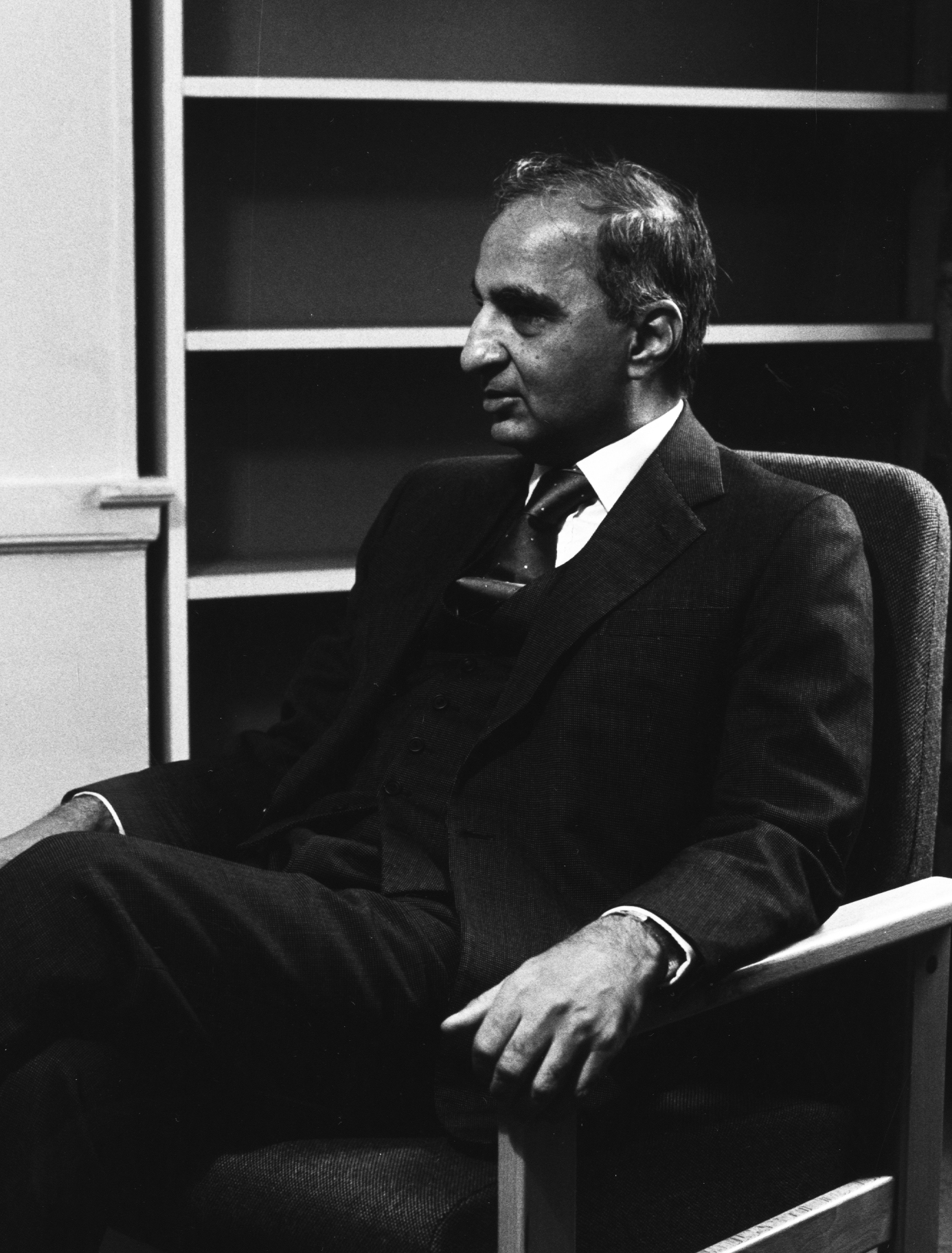
Ved MehtaVed Mehta was born on 21 March 1934 in Lahore, a centre of Urdu-speaking culture. A world was about to pass in a little over a decade – or several worlds. One of them would be that milieu of Muslim modernity and sophistication, which would change once it, like Lahore, was relocated in Pakistan. But substantial bits of colonial history themselves were becoming memory by the time Mehta was born, and the Victoria era, at least to some, seemed like a golden age. Maybe it’s no accident that the word ‘gold’ should come up when Mehta, in his book The Ledge Between the Streams (1984), recalls his paternal grandmother saying that ‘[t]he reign of the Top Queen was the best of all reigns. In her reign, people could walk on the streets wearing a lot of gold and no one would bother them.’ He adds, swiftly invoking the turbulence of a life in which queens became statues, and light, almost before you knew it, became dark: ‘We would always finish our walk at the statue of the Top Queen. I never knew what the statue looked like. (When I was almost four, I had been left totally blind as a result of an attack of meningitis.)’ That parenthetical interjection exemplifies how Mehta balances the various facets of his life in his writing, and how his blindness seems incidental to its unfolding. It is a life not of stasis and groping in the dark; it’s one in which a great deal happens – almost too much, by ordinary standards. 

When he was 13, India became free, and was partitioned, and Mehta’s family, being Hindu Punjabis, moved from ‘Mehta Gulli’, the lane in which they lived, named after them, to Bombay, then Delhi, and then Simla. Mehta had already been displaced before then by his blindness – to the Dadar School for the Blind in Bombay. After he’d lost his sight, he had heard his uncle Kishan say, ‘Vedi will be my responsibility’, and his father, whom he called ‘Daddyji’, reply, after ‘a long silence’: ‘As long as I am alive, he will be my responsibility.’ This deep family feeling didn’t result in a sense of dependency in the young Ved; early on, in a cheery, resolute way very different from the examples of fortitude we find in comparable Western prototypes, he was becoming self sufficient – learning how to type, for instance – in a way that is reminiscent of people from his country who may have been more fortunate than him in being sighted, but were less well off. What I mean is that Mehta and his progress are non-lugubrious. His tone, as a writer, is comic. As with the young Naipaul in his BBC days in London, it’s as if gaining self-sufficiency as a human being (embodied by Naipaul in his attempts to begin typing a novel on ‘non-rustle’ BBC paper) is somehow coeval with becoming a writer; as if writing were somehow part of, rather than being extrinsic to, the struggle to stand on one’s feet. All this is conveyed without stoicism. Mehta, the person and the writer, doesn’t spend too much ruminating; things happen to him, and he makes something of them when they do. In 1949, after several failed attempts to continue his education at a suitable institution, he was offered a place at the Arkansas School for the Blind. In Sound-Shadows of the New World (1986), he describes how he flew to New York alone, carrying, surreptitiously, a Braille copy of Murder on the Orient Express (he did not want his blindness to be noticed). 

Mehta was a modern; he was aware of the privilege of being Indian. This must have been a source of his capacity to learn, and of the genuine optimism that characterised his generation. Spending, before moving on to Arkansas, a few days with the di Francescos in New York – a couple comprising a hospitable wife and her blind husband – he has trouble understanding where things are on the dinner table according to the clockface-based instructions Mrs di Francesco gives him (‘The peas are at twelve and the spaghetti and meatballs at six’). Mrs di Francesco says, noting his puzzlement, ‘I thought all blind people knew . . .’ Mehta ‘bridles’ at the husband’s response – ‘You forget that India has many primitive conditions . . . Without a doubt, work for the blind there is very backward’ – and replies, ‘There is nothing primitive or backward about India.’ This is a Gandhian rebuttal; for all his self-effacing amiability and his eagerness to learn, being a modern means that Mehta was also working things out for himself. Yet speaking up for another way of life was difficult: ‘There was a silence, in which I could hear Mr di Francesco swallowing water. I felt very much alone. I wished I were back home.’ 

From the Arkansas School for the Blind he went to Pomona College in California, graduating in 1956. The following year, with extraordinary precociousness and almost a kind of cheekiness, he published a memoir, Face to Face. He was 23 – he’d had enough experience to return to again and again, from a variety of perspectives and often with the focus on different family members (Delinquent Chacha, 1967, Daddyji, 1972, Mamaji 1980), over the next two decades. If Graham Greene was right in saying that everything a novelist will use as material happens in the first seven years of his life, then some version of this periodisation and insight is even truer for Mehta the memoirist: not seven, but certainly 15 or 16. Add to the books I’ve already named The Ledge Between the Streams (1984), Sound-Shadows of the New World (1986), and Vedi (1983), and you have one of the most substantial undertakings in autobiography in the English language, achieved with a humanity and effortlessness that is more striking than another feature that was always commented on: the illusion created by his writing that he could see. 

Mehta was a writer already by the time he did a second BA in Modern History at Balliol, graduating in 1959. His years at Balliol, where he spent some time dealing with abortive infatuations with women who themselves seemed, annoyingly, besotted with a Bengali contemporary called Amartya Sen, are recorded in Up at Oxford (1993). Then he returned to America, gaining an MA at Harvard in 1961, the same year he became a staff writer at the New Yorker. He would be at that journal for 33 years; the first book-length compilation of his New Yorker writings (to which he’d begun contributing before he became a staff writer) is to be found in the slim, perspicacious, and elegant volume Walking the Indian Streets (1960). This book also features a friend, the poet Dom Moraes, and records a moment of vividness accompanying their transformation into young men of the world – inhabiting it, noting its details, mocking it, entering and contributing to, in their own way, the intelligence and playfulness of the 1960s: a long way from, yet somehow connected to, the 15-year-old who typed out ‘My Dearest Daddyjee, I reached New York yesterday. It was a very long Journey than we expected it to be.’ 

Mehta died on 9 January this year, and he should be remembered as one of the main creators of a small, distinctive tradition within the larger tradition of modern Indian writing. This tradition, of the English-language essay, or memoir, or autobiography, was an anomaly at a time when the major literary works in India were being composed in the Indian languages (in some of these languages, that tradition had existed for over a hundred years by then), and where English may have been associated with corporate or professional success but no serious imaginative or creative purpose. The elite metropolitan creative practices and publications were non-Anglophone. In 1951, Nirad C. Chaudhuri published The Autobiography of an Unknown Indian, an extraordinary Proustian feat, going against the grain of a belief created in 1865 by the novelist Bankimchandra Chatterjee when he wrote Durgeshnandini, that both serious and popular work by Bengalis must be written in Bangla. Chatterjee had himself gone against the grain at that time, and abandoned the English in which he had his first novel, Rajmohan’s Wife (1864), which would from then on be seen as apprentice work. Eighty-six years later, Chaudhuri returned to English, but not necessarily as a full-blown representative of either the Calcutta elite or a new Anglophone Indian one; despite the life he made for himself in Calcutta, he was a man who grew up in the provinces, in Kishorganj in East Bengal, and English was his second language. The same could be said of Mehta; that his first language was Punjabi and his origins – despite his beginnings in Lahore, where his father was a leading public health official – non-metropolitan (Mehta Gulli was ‘a bit like our ancestral village, except the houses here are made of brick and cement and are permanent’). An English style was perfected by Indians in the 19th century and then largely abandoned in the mother-tongue-oriented cosmopolitan turn (I use that adjective because the turn wasn’t a nativist one); then it resurfaced in writers like Chaudhuri and Mehta, who published his first book six years after Chaudhuri’s though he was less than half his age. This tradition’s origins were makeshift and provincial. Its aims were realist: to create a new record of a world. Mehta partly achieved this by acknowledging that, while he was sightless in his own world, the conventions of realist writing enabled him to ‘see’ in literature. To re-view the intimate interweaving of his work and life involves coming into contact again with the ongoing and unexpected narrative of personal and literary survival in India.