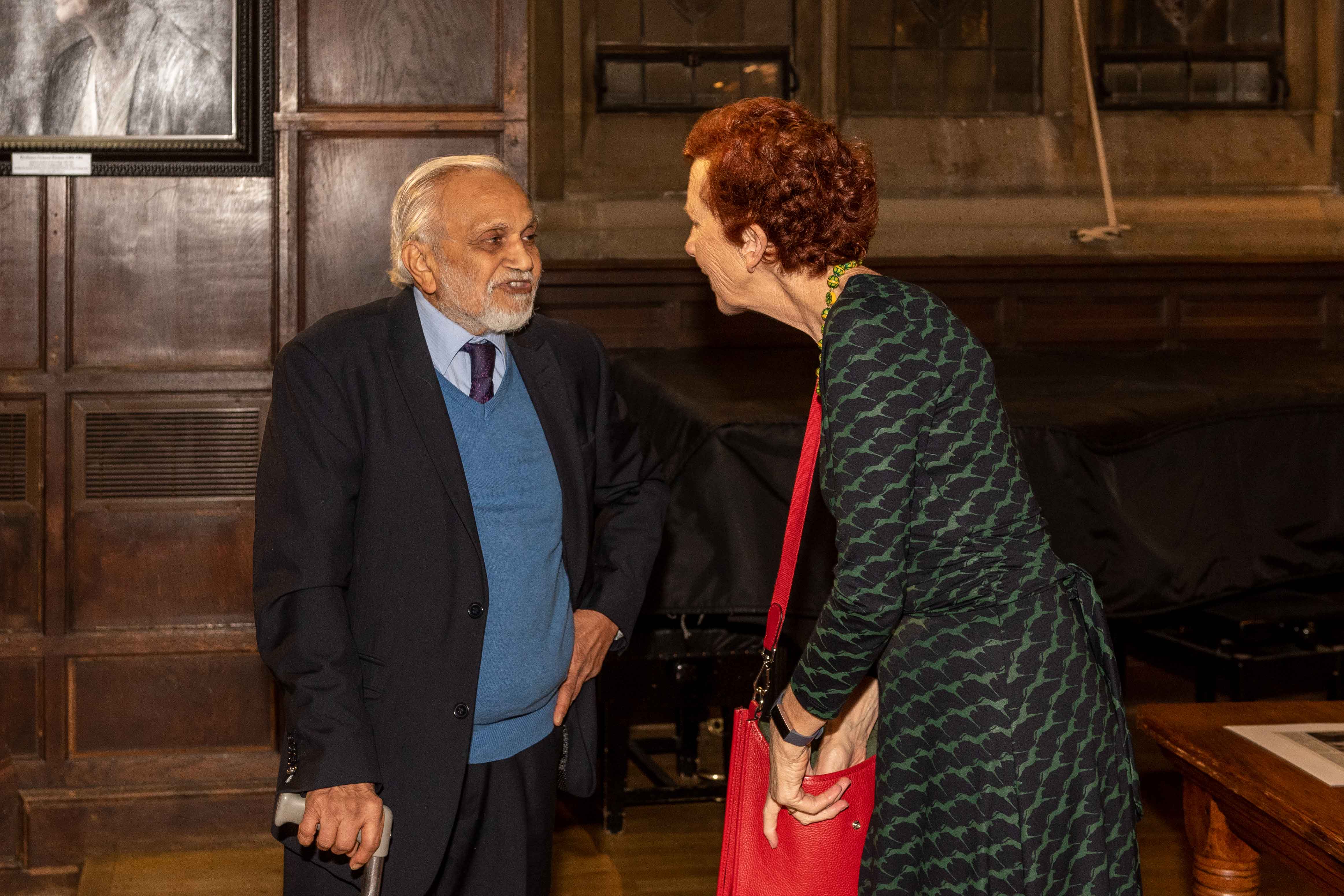
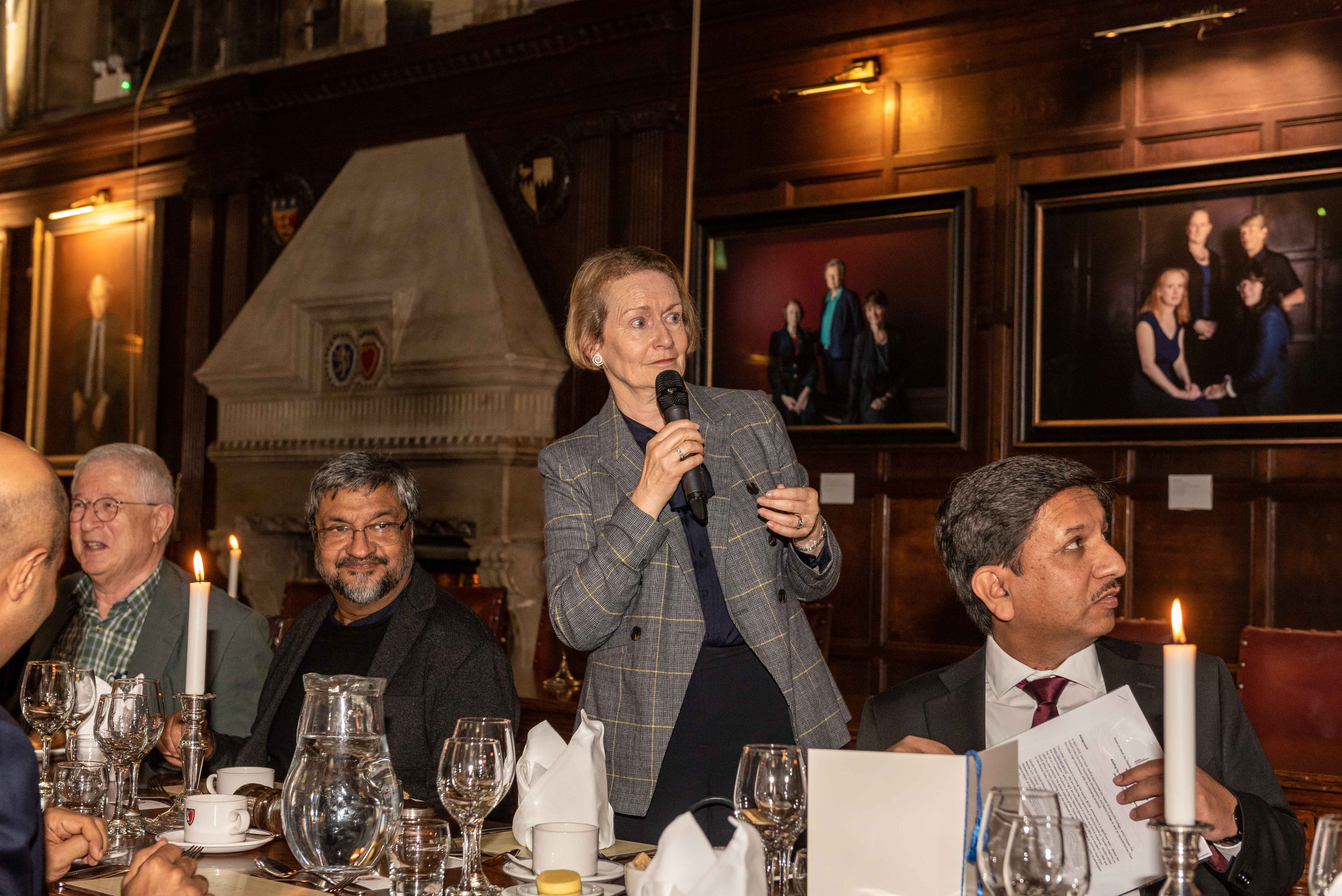
To mark the 150th anniversary of the birth of Mahatma Gandhi, Balliol College and the Oxford India Centre for Sustainable Development at Somerville College hosted a symposium to celebrate Gandhi’s life and legacy, followed by a grand commemorative dinner. Consisting of one panel discussion hosted by each college, the symposium was honoured by the presence of Her Excellency Ms Ruchi Ghanashyam, the Indian High Commissioner to the UK, and Lord Patten of Barnes, Chancellor of Oxford University (Balliol 1962), who each spoke to open the event and highlight the significance of the occasion.
The life and legacy of Gandhi is of special interest to Balliol College, not least because Gandhi stayed at the College as a guest of the then Master, Sandie Lindsay, on two separate occasions during his visit to England in 1931 in order to take part in the Round-Table Conference. It was whilst staying at Balliol that Gandhi participated in what came to be known as the ‘Oxford Conversations’ in which he privately met a number of high-profile figures including Malcolm MacDonald, Lord Lothian, and Sir Reginald Coupland. Although an impasse was impeding progress at the Round-Table Conference, it seemed that a way forward was reached during these Oxford meetings, only for these tentative agreements to unravel once the participants returned to London.
Taking these weekend visits to Oxford as a starting point, Balliol’s panel explored Gandhi’s broader philosophical and ethical commitments. The panel was chaired by Dame Helen Ghosh, Master of Balliol, who opened the discussion with an account of Gandhi’s visit. Incorporating contributions from a number of current students, who took it in turns to read from contemporary accounts of Gandhi’s time in Oxford sourced from various archives for the occasion, this introduction paved the way for debate and discussion among the three panellists: Professor Rajeev Bhargava, former director of the Centre for the Study of Developing Societies and Honorary Fellow of Balliol; Professor Judith Brown, Emeritus Fellow of Balliol and former Beit Professor of Commonwealth History; and Professor Faisal Devji, Professor of Indian History and Fellow of St Antony’s College.
This discussion built on those held earlier in the day as part of a panel entitled ‘Every man’s need, but not every man’s greed’, which sought to adopt and adapt Gandhi’s thinking to questions rooted in the 21st century concerning the ongoing shift towards sustainable development. Chaired by Baroness Jan Royall, this panel saw contributions from Lord Bhikhu Parekh, Professor Vinita Damodaran, Dr Radhika Khosla, and Dr Mukulika Banerjee, who each used Gandhi’s writings as a starting point to assess the extent to which his work could guide and influence how we react to pressing socio-political problems facing the globe today.
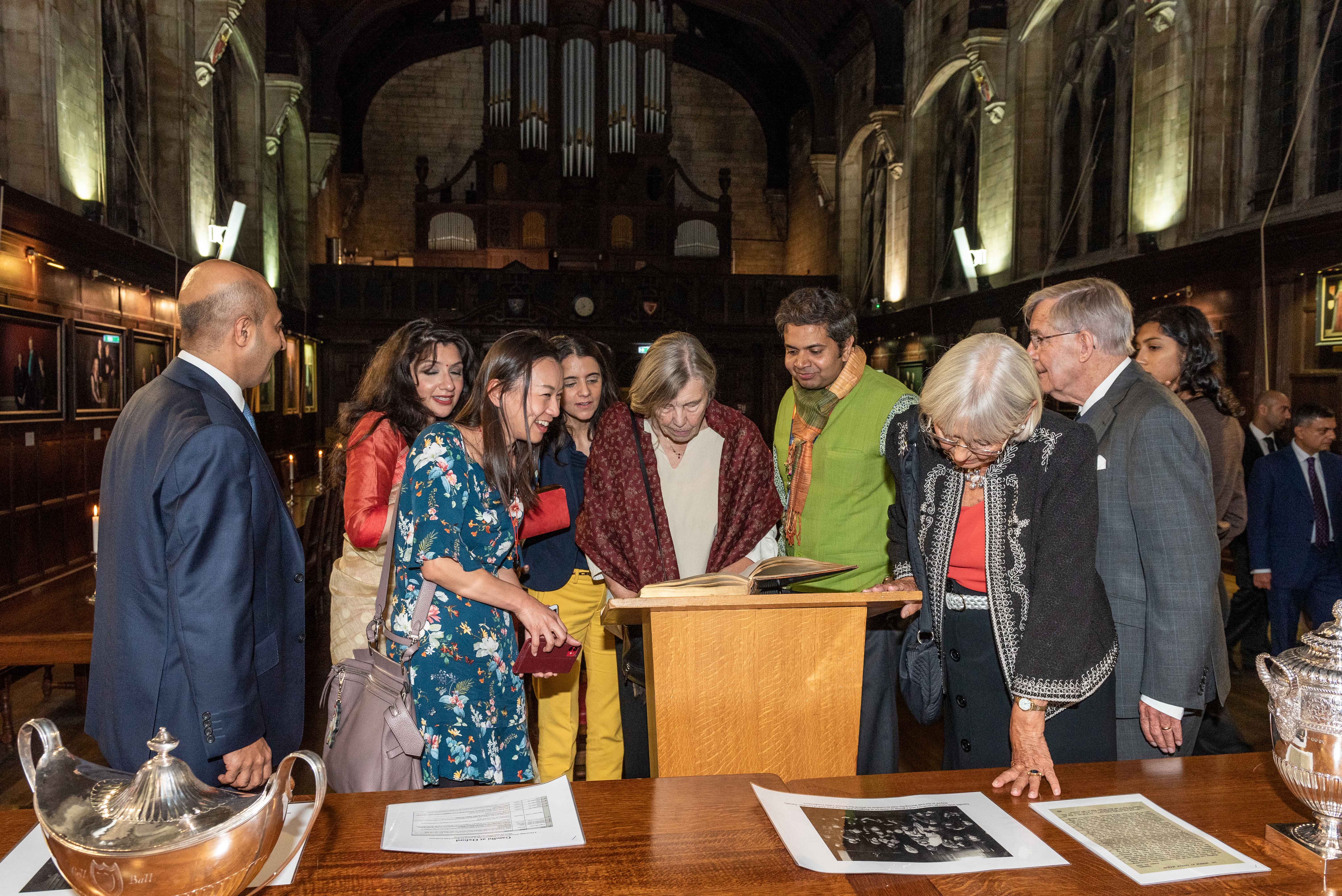
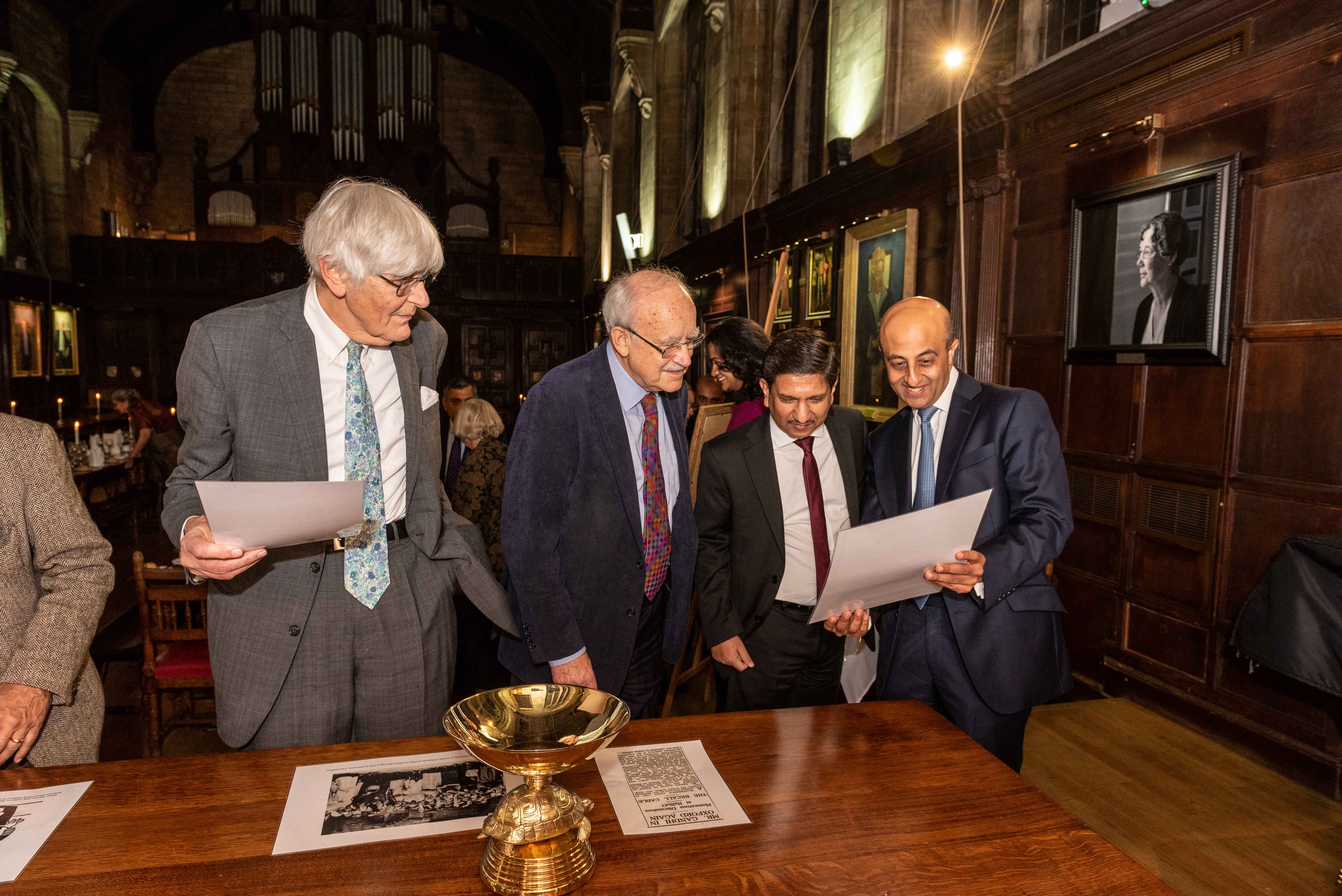
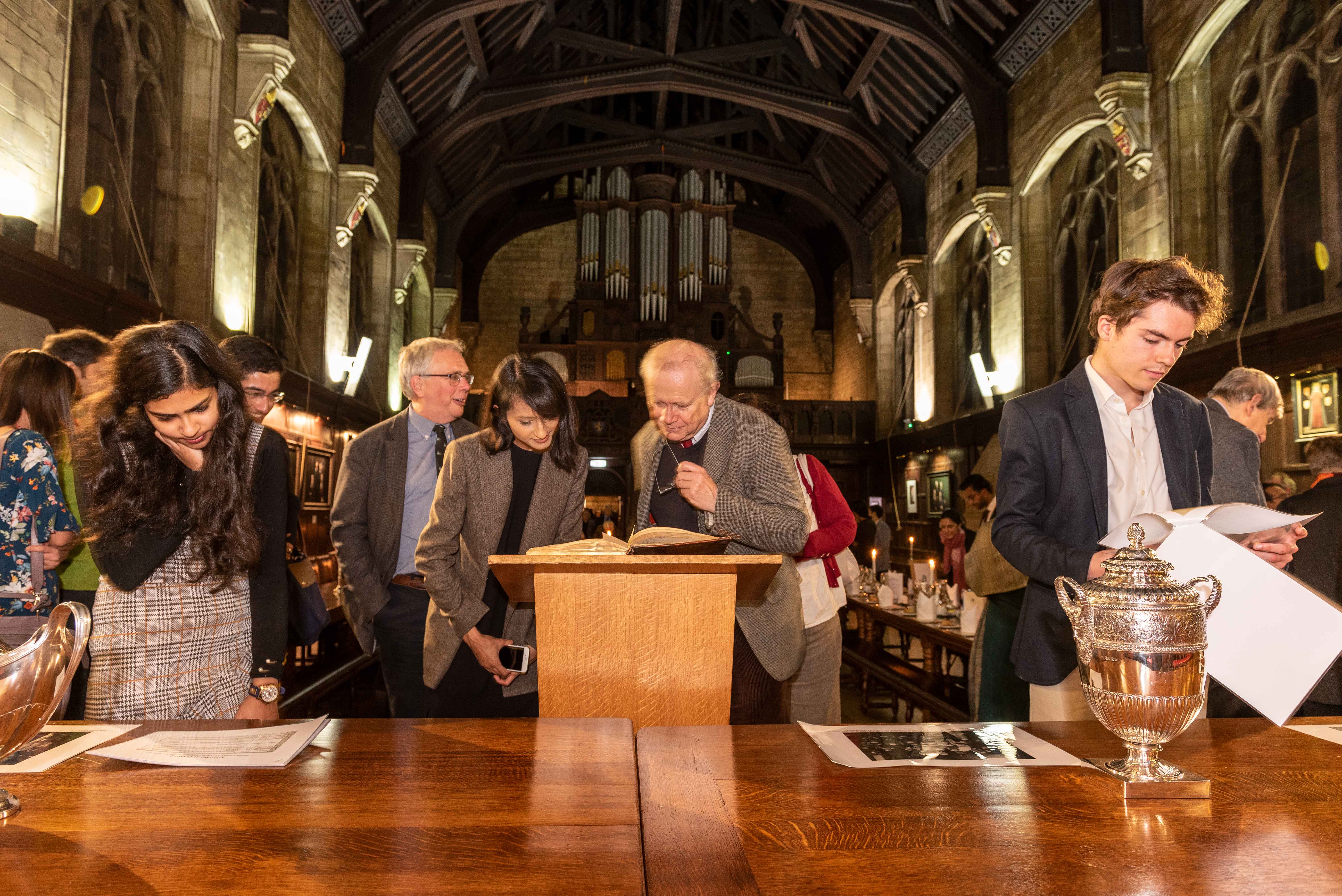
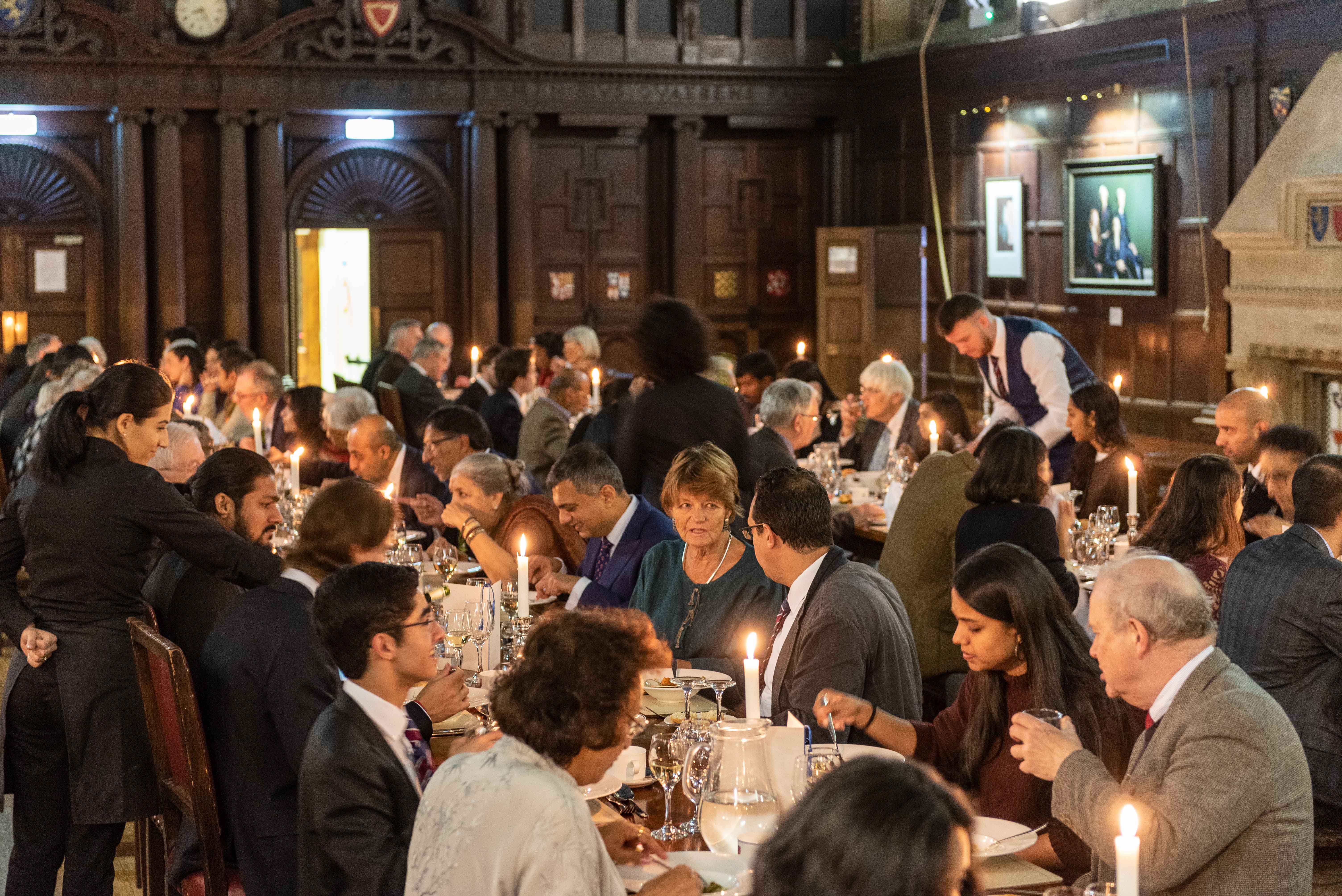
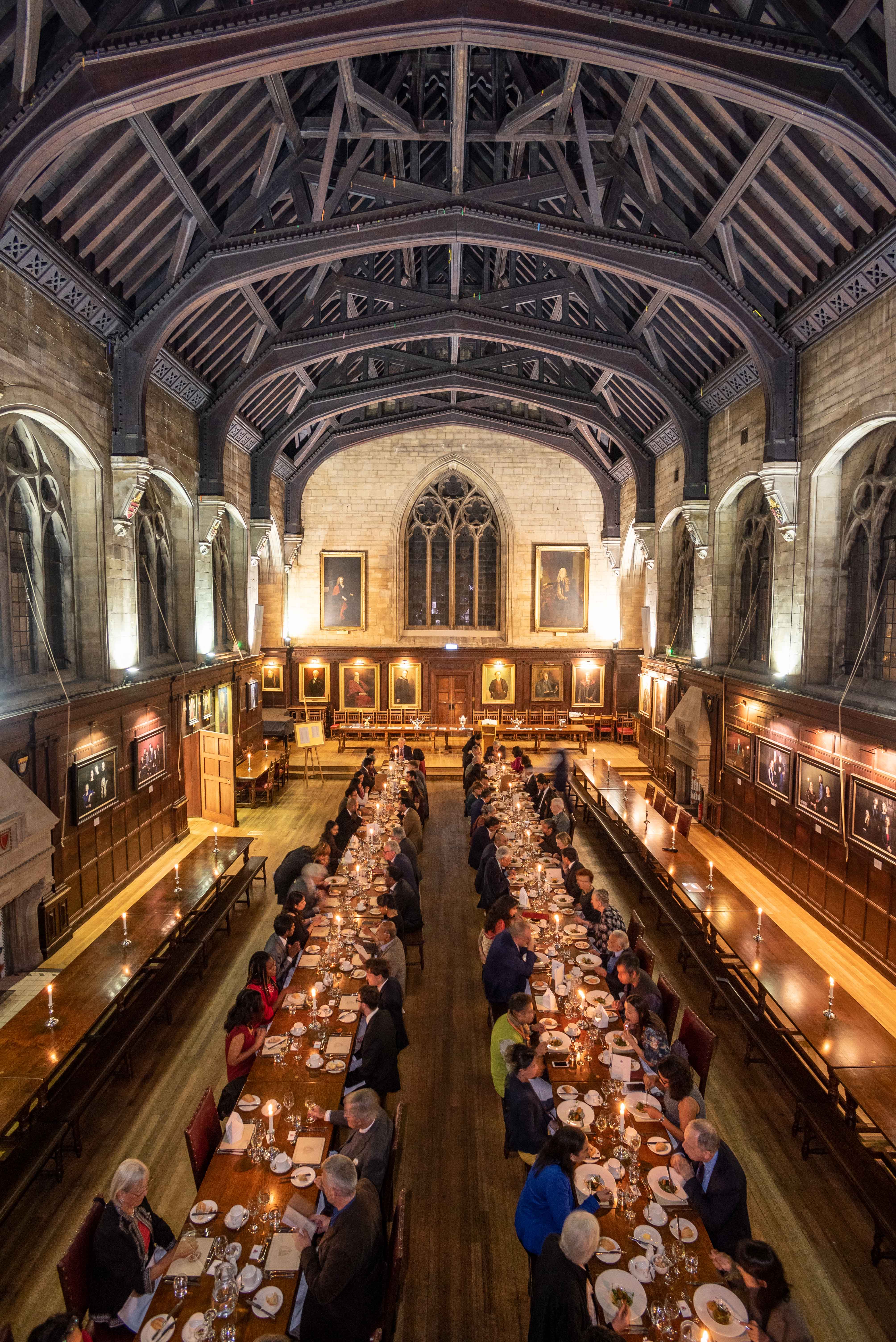
The symposium was followed by a sumptuous commemorative dinner held in Balliol’s Hall. Featuring a vegetarian menu prepared especially for the night, guests were treated to Ragda Pattice, a traditional dish which originates from Gandhi’s birth state, Daal Chawal and a north-Indian favourite, and a white chocolate ganache cake ingeniously assembled so as to resemble a spinning wheel. Guests also had the opportunity to examine the Balliol Master’s Visitor Book relating to 1931 and to see the unassuming signature of Mahatma Gandhi as part of a small exhibition on the Mahatma’s time in Oxford.
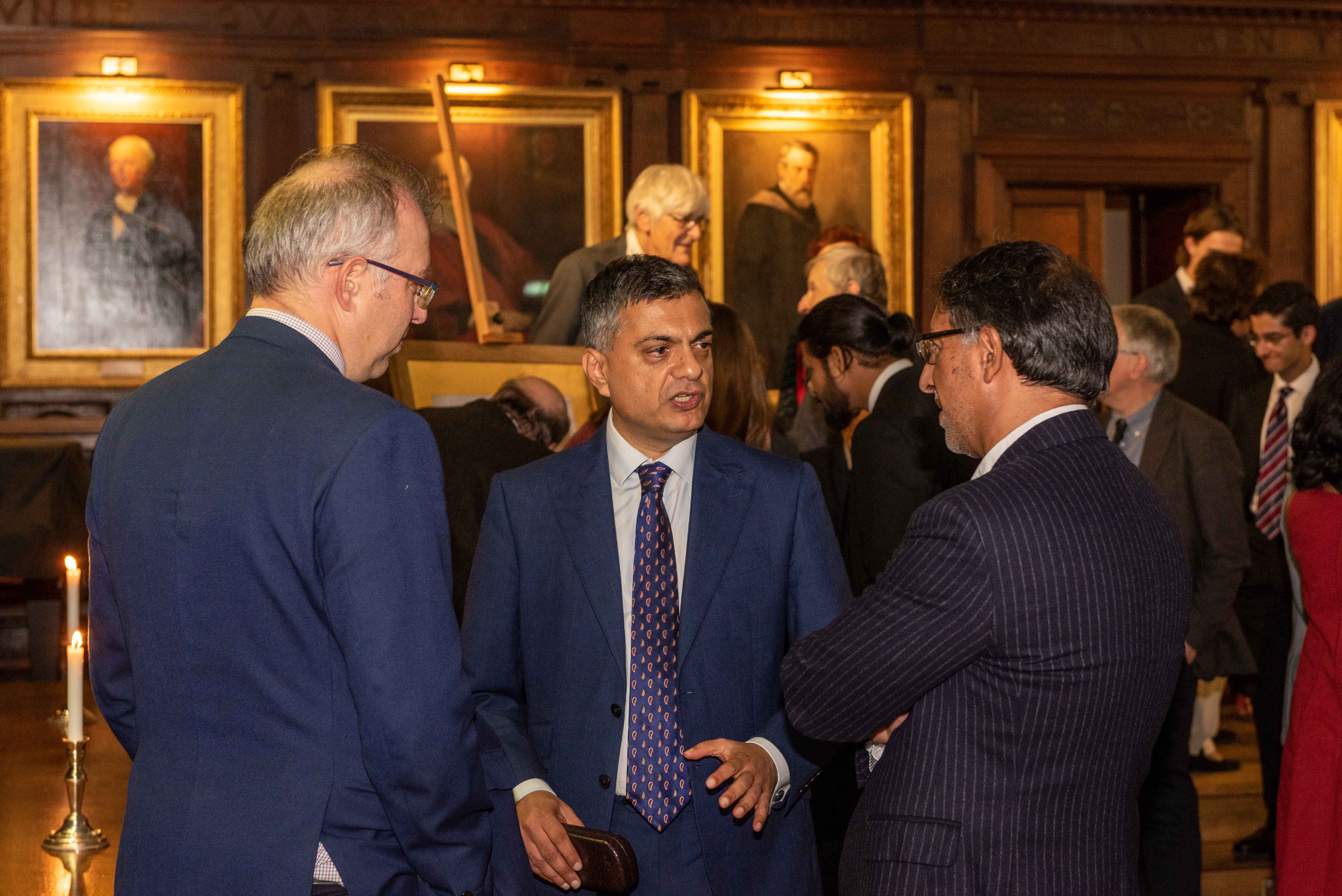
Photographs below from the dinner by Stuart Bebb